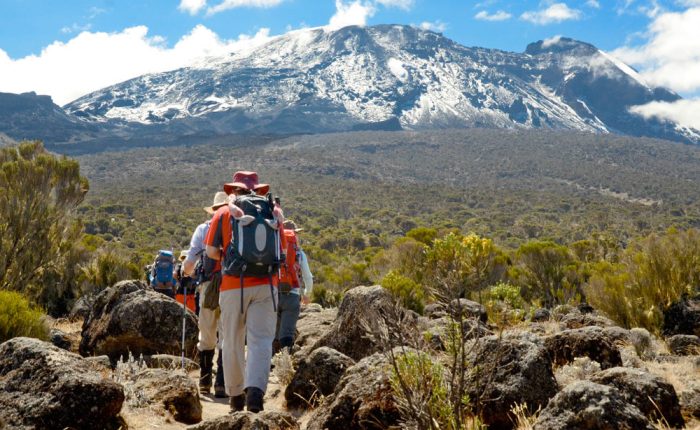
Mountain Hut Accommodation
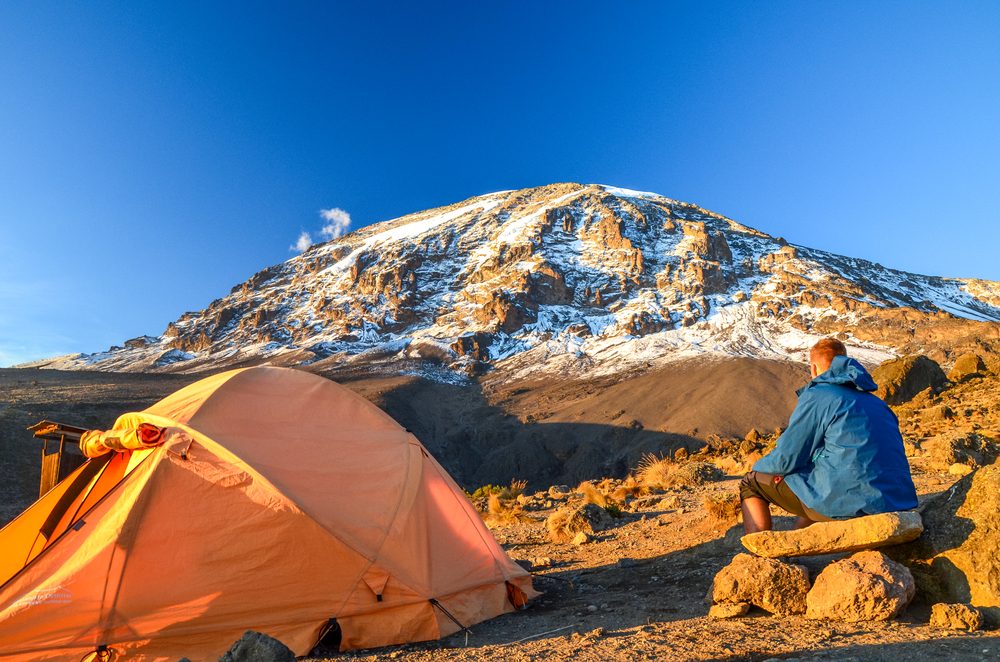
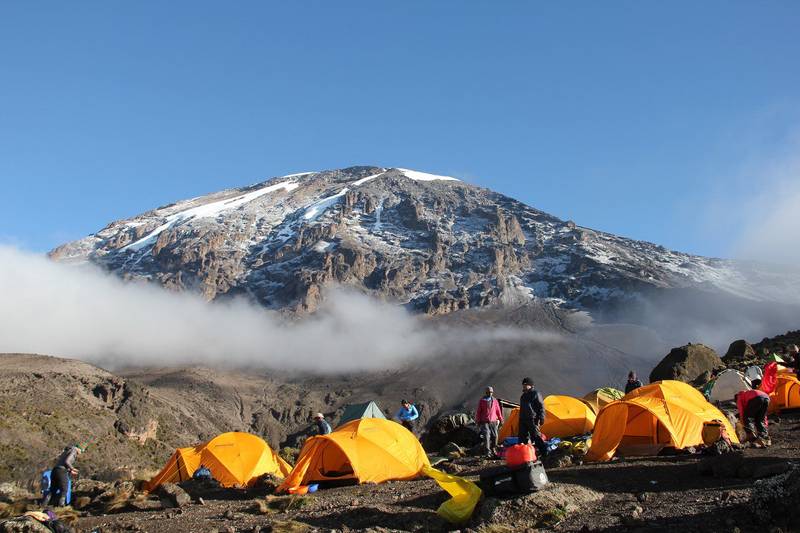
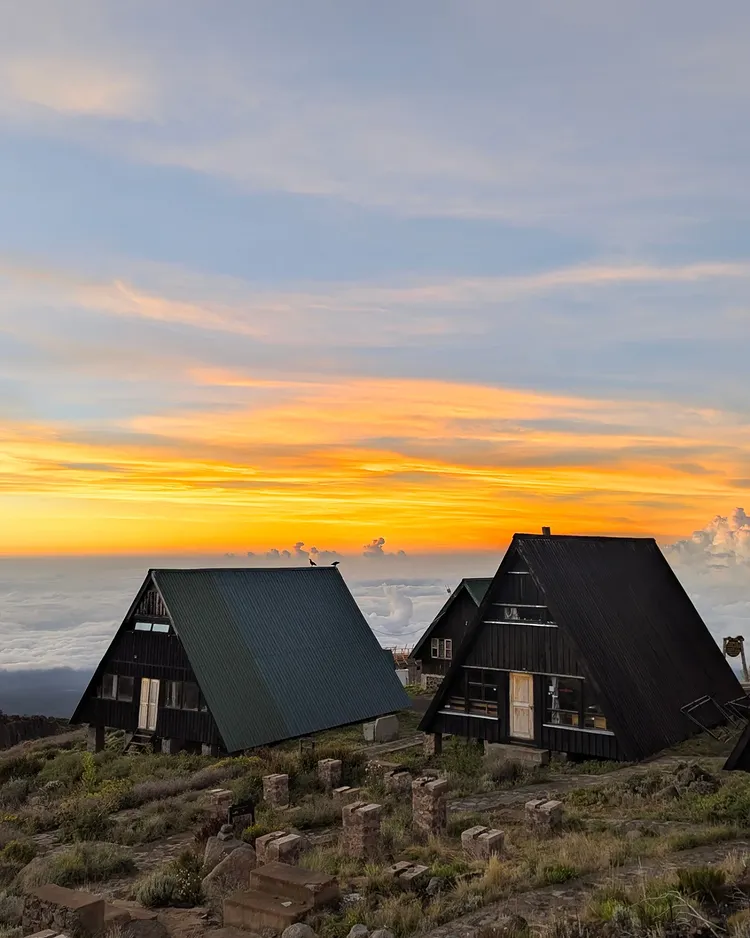
Sleep in designated mountain huts at Mandara, Horombo and Kibo instead of using tented camps along the climbing route.
Explore hut accommodation →Follow Kilimanjaro’s classic hut route through lush rainforest, open moorland and dramatic alpine landscapes as you journey toward Uhuru Peak at 5,895 metres. This carefully paced Go Vision Safaris itinerary includes additional time for acclimatization before the final summit challenge.
Guided locally in Tanzania by the Go Vision Safaris mountain team.
The 8-Day Kilimanjaro Marangu Route combines your arrival in Tanzania, a six-day mountain journey and departure into one thoughtfully structured itinerary.
Beginning at Marangu Gate, the trail climbs through tropical rainforest, open moorland and high-altitude alpine terrain before reaching Kibo and the final ascent toward Uhuru Peak at 5,895 metres. An additional acclimatization day at Horombo is included to create a more measured approach to the mountain.
Rather than rushing directly from Horombo toward Kibo, this itinerary gives you a dedicated acclimatization day to experience the mountain at a more considered pace before moving higher.
Explore the acclimatization plan →The Marangu Route offers a distinctive way to climb Mount Kilimanjaro, combining an established mountain trail with overnight stays in designated huts rather than tents.
From lush rainforest around Marangu Gate to open moorland, high-altitude desert and the final summit slopes, the route reveals several of Kilimanjaro’s remarkable ecological zones in one journey. Our 8-day Go Vision itinerary also includes dedicated acclimatization time at Horombo before continuing toward Kibo.
Sleep in designated mountain huts at Mandara, Horombo and Kibo instead of using tented camps along the climbing route.
Explore hut accommodation →Follow one of Kilimanjaro’s best-known climbing routes through clearly defined mountain environments toward the summit zone.
Explore the route →Trek from rainforest into heath and moorland before reaching stark alpine terrain and the dramatic upper slopes of Kibo.
Discover the climate zones →Our itinerary includes a dedicated Horombo acclimatization day, giving your body additional time to adjust before climbing higher.
Understand acclimatization →Marangu’s established trail and hut accommodation should not be confused with an easy ascent. Fitness, preparation, appropriate equipment, sensible pacing and acclimatization remain essential parts of the journey.
A well-paced climb is about more than reaching the top. It is about experiencing Kilimanjaro responsibly, one stage at a time.
See our approach to altitude →Arrive in northern Tanzania and settle in before beginning your 8-day Kilimanjaro Marangu Route adventure. Today is intentionally relaxed, giving you time to rest after your journey and prepare carefully for the climb ahead.
After arrival, the Go Vision Safaris team will welcome you and assist with your transfer. Later, you will meet your mountain team for a pre-climb briefing covering the Marangu Route, daily trekking rhythm, mountain conditions, equipment and important preparation for the days ahead.
Meet the Go Vision team and begin your Kilimanjaro experience.
Private transfer arranged according to your confirmed arrival details.
Review the route, equipment, pacing and practical mountain information.
Use the evening to relax, organize your gear and prepare for Marangu Gate.
Day one is deliberately unhurried so you can organize your equipment, meet your team and focus on the mountain ahead.
Prepare for your mountain stay →Today your Marangu Route climb officially begins. After breakfast, meet your Go Vision mountain team and travel to Marangu Gate, where the Kilimanjaro adventure moves from preparation to the trail.
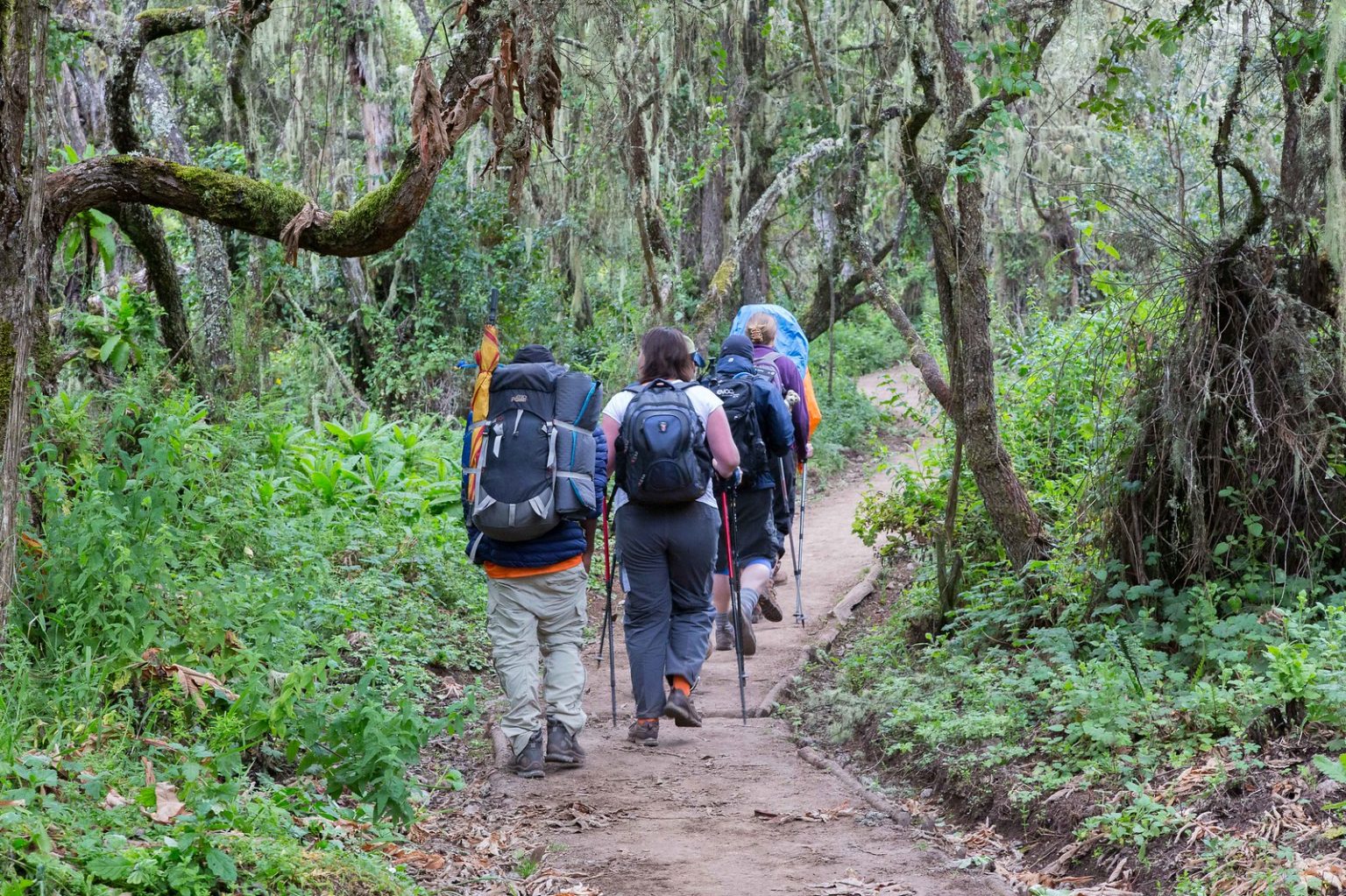
From the gate, the path rises gradually toward Kilimanjaro's forested slopes. The scenery becomes increasingly lush as you move beneath a canopy of mountain vegetation and deeper into the rainforest.
The first trekking day is about finding a comfortable rhythm rather than moving quickly. Your guide will encourage a steady pace as you gain altitude and make your way toward Mandara Hut at approximately 2,720 metres.
Marangu Gate
Mandara Hut
Lush lower Kilimanjaro slopes
Begin finding your mountain rhythm
After reaching Mandara, there may be an opportunity for a short additional walk in the surrounding area. This is a gentle way to experience more of Kilimanjaro's lower mountain landscape before settling in for the evening.
Continue through the itinerary →Do not be tempted to rush because the trail feels comfortable. A measured pace, regular hydration and conserving energy become increasingly important as the altitude rises.
Learn about acclimatization →Leave Mandara behind and continue higher into a noticeably different side of Mount Kilimanjaro, where dense forest begins giving way to open heath and moorland.
As altitude increases, vegetation gradually becomes lower and the landscape more exposed. The wider views give this stage a very different feeling from yesterday's rainforest walk.
Your Go Vision mountain guide will continue to encourage a controlled, comfortable rhythm as you climb towards Horombo Hut at approximately 3,720 metres. This is an important point in the journey as your body begins adjusting to significantly higher altitude.
Mandara Hut
→ 02 FINISH 3,720 mHorombo Hut
→ 03 ELEVATION GAIN Approx. +1,000 mA significant altitude increase
→ 04 LANDSCAPE Heath & MoorlandIncreasingly open mountain scenery
→Walk steadily, drink regularly and communicate openly with your guide about how you feel. There is no advantage in rushing at altitude.
Learn about acclimatization →Slowly, steadily and with respect for the altitude — the mountain rewards patience.
Prepare for higher altitude →Today is deliberately different from the previous trekking days. Instead of immediately pushing higher toward Kibo, you remain around Horombo and allow your body more time to adapt to Kilimanjaro's increasing altitude.
Depending on mountain conditions and your guide's assessment, the day can include a measured acclimatization walk into the surrounding highland landscape before returning to Horombo.
The objective is not speed or distance. The focus is steady movement, hydration, rest and spending useful time at altitude before tomorrow's climb into the higher alpine environment toward Kibo Hut.
Your body receives additional time to adjust before sleeping significantly higher on the mountain.
02 Controlled WalkingA gentle acclimatization walk keeps you moving without turning the day into another major ascent.
03 Hydration & RecoveryDrink regularly, eat well and use the quieter pace to recover from the first two trekking days.
04 Prepare for KiboOrganize your layers, equipment and mindset before entering the colder, more exposed upper mountain.
Tell your mountain guide how you are feeling throughout the day. Headache, nausea, unusual fatigue or other altitude-related symptoms should never be hidden simply because you want to continue climbing.
Review mountain safety →The defining stage of your 8-Day Kilimanjaro Marangu Route: leave Kibo in the darkness, climb toward the crater rim, continue toward Africa's highest point when conditions allow, then descend to Horombo Hut for a well-earned rest.
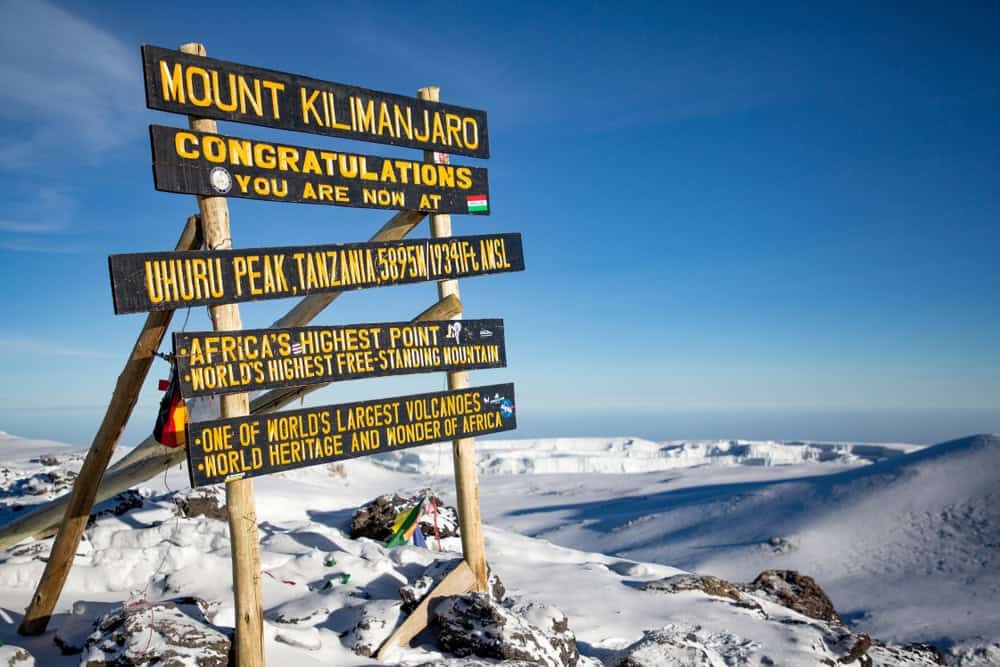
Kibo Hut → Gilman's Point → Uhuru Peak → Kibo → Horombo Hut
Your summit attempt begins during the night from Kibo Hut. With headlamps lighting the trail, the group moves slowly upward through Kilimanjaro's cold, thin upper air.
The first major objective is Gilman's Point at 5,681 metres, where you reach the crater-rim area. This is already a demanding achievement.
Those continuing toward the highest point move onward across the upper mountain toward Uhuru Peak at 5,895 metres. The pace remains deliberate — this is not a race.
Reaching the summit is an extraordinary moment, but your mountain guide's assessment of your wellbeing and the conditions remains more important than continuing upward.
Begin the ascent in darkness with your guide, headlamp and summit layers already prepared.
02 CRATER RIM Gilman's PointReach approximately 5,681 m and pause before assessing the continuation toward Uhuru.
★ SUMMIT Uhuru PeakContinue toward 5,895 m when conditions, altitude and your wellbeing allow.
04 DESCENT Return to KiboDescend from the summit zone and begin returning to considerably lower altitude.
05 OVERNIGHT Continue to HoromboDescend farther to Horombo Hut and settle in for a much-needed rest.
The departure is made in darkness and cold conditions, so everything you need should be organised and easy to access before settling down at Kibo.
Open the full packing list →“Slowly, slowly” matters most on summit night. Follow the pace set by your mountain guide and conserve energy for the long day ahead.
High altitude affects people differently. Report unusual or worsening symptoms to your guide promptly. The correct mountain decision may sometimes be to stop ascending or begin descending.
If conditions and your wellbeing allow you to reach Uhuru Peak, take a moment to appreciate how far you have travelled — from Marangu's green lower slopes to Kilimanjaro's extraordinary summit environment.
See the full route journey →After the upper mountain, you descend through Kibo and continue toward Horombo Hut. Stay focused, use trekking poles where helpful and maintain a controlled pace on tired legs.
After the intensity of summit day, your final trek begins at Horombo Hut and leads steadily downward through Kilimanjaro's changing landscapes toward Marangu Gate.
The morning feels very different from the previous day's summit challenge. You are now moving toward thicker air, warmer temperatures and increasingly greener surroundings.
As altitude decreases, the open heath and moorland gradually give way to Kilimanjaro's lush lower forest — bringing you back through landscapes that feel worlds away from the summit.
The descent may feel easier on your breathing, but tired legs still require care. Maintain a controlled pace, especially on steep, uneven or potentially slippery sections of trail.
Reaching Marangu Gate marks the completion of your Kilimanjaro trekking journey. It is a moment to take off your backpack, breathe deeply and appreciate what your body, mindset and mountain team have achieved together.
The final descent still deserves your attention. Trekking poles can be helpful, particularly for tired knees, and a controlled walking pace is better than rushing downhill.
Five remarkable environments. One extraordinary mountain.
Climbing Mount Kilimanjaro is much more than gaining altitude. The Marangu Route carries you through a remarkable sequence of landscapes as conditions become progressively cooler, drier and more exposed.
Within only a few days, lush lower slopes give way to heath, moorland, alpine desert and finally the extreme environment surrounding Uhuru Peak at 5,895 metres.
Follow the mountain's altitude progression →Before entering Kilimanjaro National Park, the Marangu landscape is shaped by fertile lower slopes, local communities and cultivated land.
Explore the Route →The trekking route begins beneath a lush mountain canopy. Expect greener surroundings, greater humidity and the possibility of wet or muddy trail conditions.
Explore Day 2 →The forest begins opening into a cooler and more exposed environment. Vegetation becomes shorter while wide mountain views increasingly dominate the experience.
Explore Horombo →Vegetation becomes scarce and Kilimanjaro takes on a stark, volcanic character. The air is thinner, conditions are more exposed and conserving energy becomes increasingly important.
Explore Kibo →The final ascent enters Kilimanjaro's most extreme environment: cold, thin air, exposed volcanic terrain and the summit landscape surrounding Uhuru Peak.
Explore Summit Day →Conditions can change considerably as altitude increases, which is why effective layering is essential on Kilimanjaro. Your clothing system needs to adapt from humid lower trails to exposed and potentially very cold summit conditions.
Open the complete Kilimanjaro packing list →Marangu begins green and alive, becomes increasingly open and volcanic, and eventually reaches an environment where altitude, ice, rock and sky dominate everything around you.
See where each landscape appears in your itinerary →Everything should be clear before you start climbing. Review the core mountain services, personal expenses and optional extras connected to your 8-Day Marangu Route.
A successful Kilimanjaro journey depends on much more than reaching the trailhead. Your Go Vision Safaris package is designed to coordinate the essential mountain services, local support and logistics needed throughout the 8-Day Marangu Route.
Your final quotation will always confirm the exact services included for your travel dates and group size.
Core services arranged for your Go Vision Kilimanjaro journey.
Applicable park-entry and mountain fees associated with the confirmed Marangu Route itinerary.
Overnight mountain accommodation at Mandara, Horombo and Kibo as scheduled in the itinerary.
Guided support throughout your Kilimanjaro ascent, acclimatization stages and descent.
Crew support for carrying designated expedition equipment and your permitted mountain luggage.
Meals prepared during the mountain portion of your climb according to the confirmed itinerary.
Water arrangements during trekking days, prepared according to mountain procedures.
Confirmed airport, hotel and Marangu Gate transfers connected to your climbing itinerary.
Applicable Kilimanjaro rescue fee as included within the confirmed mountain arrangements.
Route preparation, equipment review and practical information before entering the mountain.
Pre-travel coordination and local assistance throughout your scheduled Tanzania journey.
Personal and international travel costs normally arranged separately.
Air travel to and from Tanzania unless specifically added to your confirmed proposal.
Visa charges and any traveller-specific immigration requirements.
Appropriate travel insurance, including cover for high-altitude trekking and medical emergencies.
Tips for guides, porters and mountain staff are normally budgeted separately.
Boots, clothing, sleeping bag, trekking poles and other personal mountain equipment unless specifically listed as included.
Rental of missing personal trekking equipment unless included in your individual quotation.
Laundry, souvenirs, additional drinks, personal purchases and other individual expenses.
Safari, Zanzibar, extra hotel nights or other experiences added before or after the climb.
Because arrival times, departure flights and trip extensions vary, Go Vision will clearly identify any accommodation before and after the mountain in your final proposal rather than leaving this unclear.
Confirm accommodation with your quotation →Kilimanjaro quotations can vary according to travel dates, group size, accommodation before and after the mountain, transfer requirements and any safari or Zanzibar extension.
Request your personalised quotation →The information on this page provides a clear overview of the expected package structure. Your confirmed proposal will show the exact services, accommodation, transfers and any optional additions included in your booking.
Confirm your final package →Go Vision can prepare your Marangu Route quotation and add any safari, Zanzibar or extra Tanzania arrangements you need.
You do not need to be an elite athlete to attempt Mount Kilimanjaro. Consistent walking, tested equipment, realistic expectations and respect for altitude can make your Marangu Route experience much more comfortable.
You do not need to be an elite athlete to attempt Mount Kilimanjaro, but arriving with good walking fitness, tested equipment and realistic expectations can make your Marangu Route experience much more comfortable.
Preparation should focus on consistency rather than extreme training. Build endurance, spend time walking on varied terrain and become comfortable using the equipment you will take onto the mountain.
Understand the Marangu Route →Prepare for several consecutive days on your feet. Regular hiking, brisk walking, hills and stairs can help your body become more familiar with sustained trekking.
Uphill walking demands strength, while the long descent can be tiring for your legs. Include sensible lower-body and core work alongside your endurance training.
Do not make Kilimanjaro the first place you wear your trekking boots or carry your daypack. Test clothing, footwear and your layering system before travelling.
Fitness does not make you immune to altitude illness. Move at the pace set by your mountain guide, use your acclimatization day properly and communicate honestly about how you feel.
Develop good habits before the mountain. Eat consistently, drink regularly throughout the trekking day and carry snacks that you know you can comfortably eat while hiking.
Kilimanjaro involves cold mornings, long walking days, simple mountain accommodation and a demanding summit stage. Arrive expecting both beautiful and difficult moments.
Every climber starts from a different fitness level. Use this as a general preparation framework rather than a rigid training prescription.
Discuss your climb with Go Vision →Establish regular walking and general cardiovascular training as part of your normal week.
→ 02 BUILD PHASE Add Hills & Longer WalksIncrease time on your feet and include uphill and downhill terrain whenever practical.
→ 03 MOUNTAIN PRACTICE Use Your EquipmentHike in your boots, carry your daypack and test the clothing combinations you expect to use.
→ 04 BEFORE DEPARTURE Recover & Arrive ReadyAvoid exhausting yourself immediately before the trip. Arrive rested, organized and ready for the mountain.
Kilimanjaro rises to 5,895 metres. As you climb, your body must adjust to lower oxygen availability. This is why the Marangu itinerary includes dedicated acclimatization time at Horombo before continuing higher.
Tell your mountain guide about symptoms rather than trying to hide them. Decisions about continuing higher should always prioritize your wellbeing.
Follow the pace established by your mountain guide.
02 Drink RegularlyKeep your water accessible throughout the trekking day.
03 Eat Even When TiredRegular food helps support demanding mountain days.
04 Layer EarlyAdjust clothing before becoming excessively cold or hot.
05 Protect Your SleepKeep dry sleepwear and your sleeping system organized.
06 Speak UpTell your guide promptly when you do not feel well.
Headache, nausea, dizziness, unusual fatigue or other concerning symptoms should be discussed with your guide. If symptoms become serious or worsen, continuing upward may not be appropriate. Your health and safe return come before reaching the summit.
Read the full Kilimanjaro safety guidance →If you have a medical condition, take regular medication, have previously experienced significant altitude problems, or have concerns about high-altitude trekking, discuss your plans with an appropriate healthcare professional before travel.
Some days will feel strong. Others may feel slow. Weather changes, altitude affects people differently and summit morning can be difficult. Take the journey one stage at a time and let your guide set the rhythm.
Prepare for the summit stage →Kilimanjaro takes you from humid lower forest to cold, exposed summit conditions. The most effective packing strategy is built around layering, waterproof protection and reliable equipment.
Kilimanjaro takes you from humid lower forest to cold, exposed summit conditions. The most effective packing strategy is therefore based on layering, waterproof protection and reliable equipment.
Bring equipment you have already tested whenever possible. Your final Go Vision pre-climb briefing will confirm any route-specific requirements before you enter the mountain.
Read the full Kilimanjaro preparation guide →Start with a moisture-managing base layer, add insulation for warmth and finish with windproof and waterproof outer protection. Layers let you adjust as weather and altitude change.
Understand Kilimanjaro's changing climate zones →Break in your boots before travelling.
Stay dry while walking and warm while resting.
Your warmest system should be reserved for the upper mountain.
Your warm layers and sleeping clothes should remain protected.
You sleep in huts, but you still need a warm sleeping system.
Carry what you may need before reaching the next hut.
Essential for the pre-dawn summit ascent.
Carry important medication where you can access it easily.
Organising your equipment correctly is almost as important as choosing the right equipment.
Learn how mountain support works →Keep your daypack comfortable and avoid filling it with equipment you do not need during the walking day.
Your pre-climb briefing will confirm luggage arrangements and any weight restrictions that apply to your expedition.
The final ascent begins in cold, dark conditions. Everything needed for summit night should be checked, organised and easy to access before you go to sleep.
Review the summit stage →Avoid carrying unnecessary duplicates and bulky items simply because they might be useful. Choose reliable equipment, organise it carefully and follow the luggage guidance provided during your Go Vision briefing.
Use the final equipment check →Equipment recommendations can vary according to season, expected mountain conditions and your personal setup. We can review key items with you before the climb so that you arrive at Marangu Gate properly prepared.
Confirm your preparation with Go Vision →Take on the 8-Day Kilimanjaro Marangu Route with a carefully paced itinerary, mountain-hut accommodation, dedicated acclimatization time and a clear goal: Uhuru Peak at 5,895 metres.
Send Go Vision Safaris your preferred travel dates, number of travellers and any questions about fitness, equipment, accommodation or the Marangu Route.
If Kilimanjaro is only one part of your Tanzania journey, we can also connect your climb with a safari, Zanzibar stay or additional days in Tanzania.
Speak directly with the Go Vision Safaris team about your preferred dates and travel plans.
Build your Kilimanjaro journey with a Tanzania-based team that can connect the mountain with the rest of your trip.
02 Clear ItineraryUnderstand your mountain days, acclimatization, inclusions and preparation before arriving in Tanzania.
03 Flexible ExtensionsAdd a wildlife safari, Zanzibar escape or additional Tanzania experiences around your climb.
04 Personal SupportAsk questions about packing, preparation and logistics instead of trying to organise every detail alone.
Start with one message. Tell us when you want to climb, and let Go Vision Safaris help you turn your Kilimanjaro plan into a complete Tanzania journey.