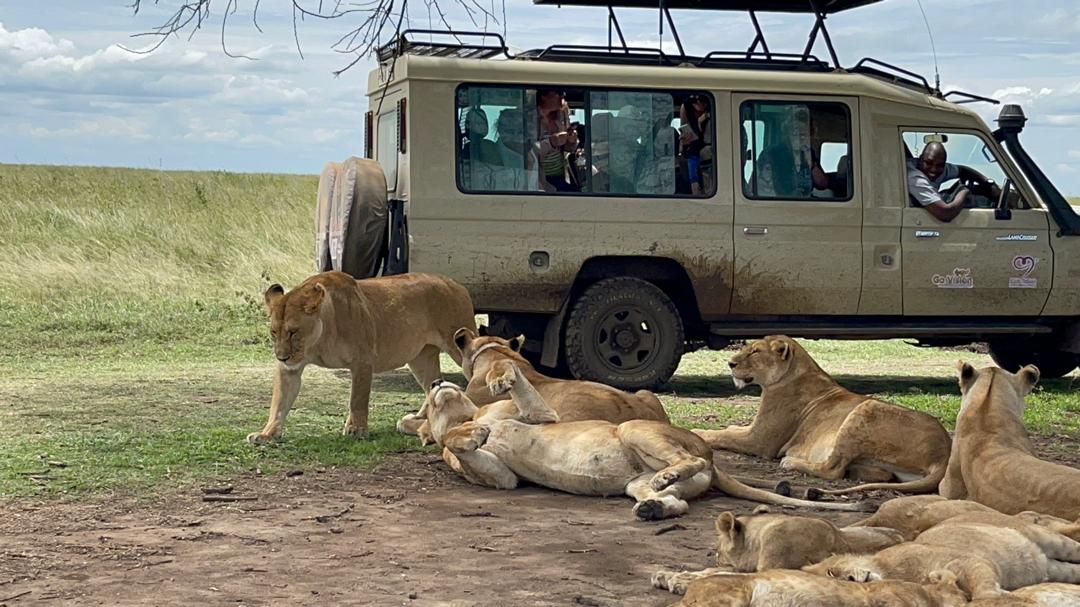
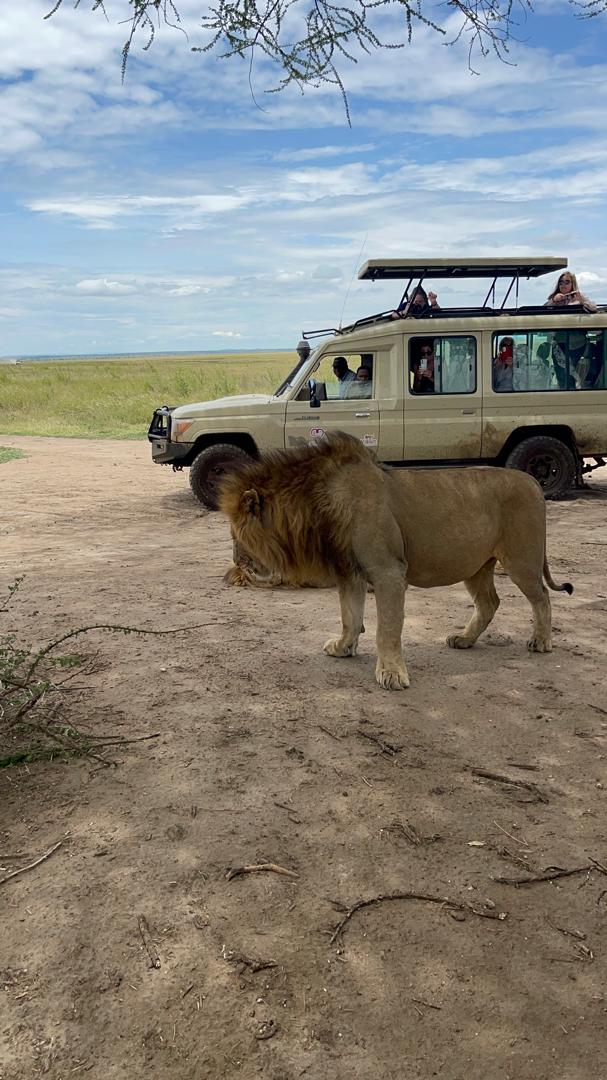
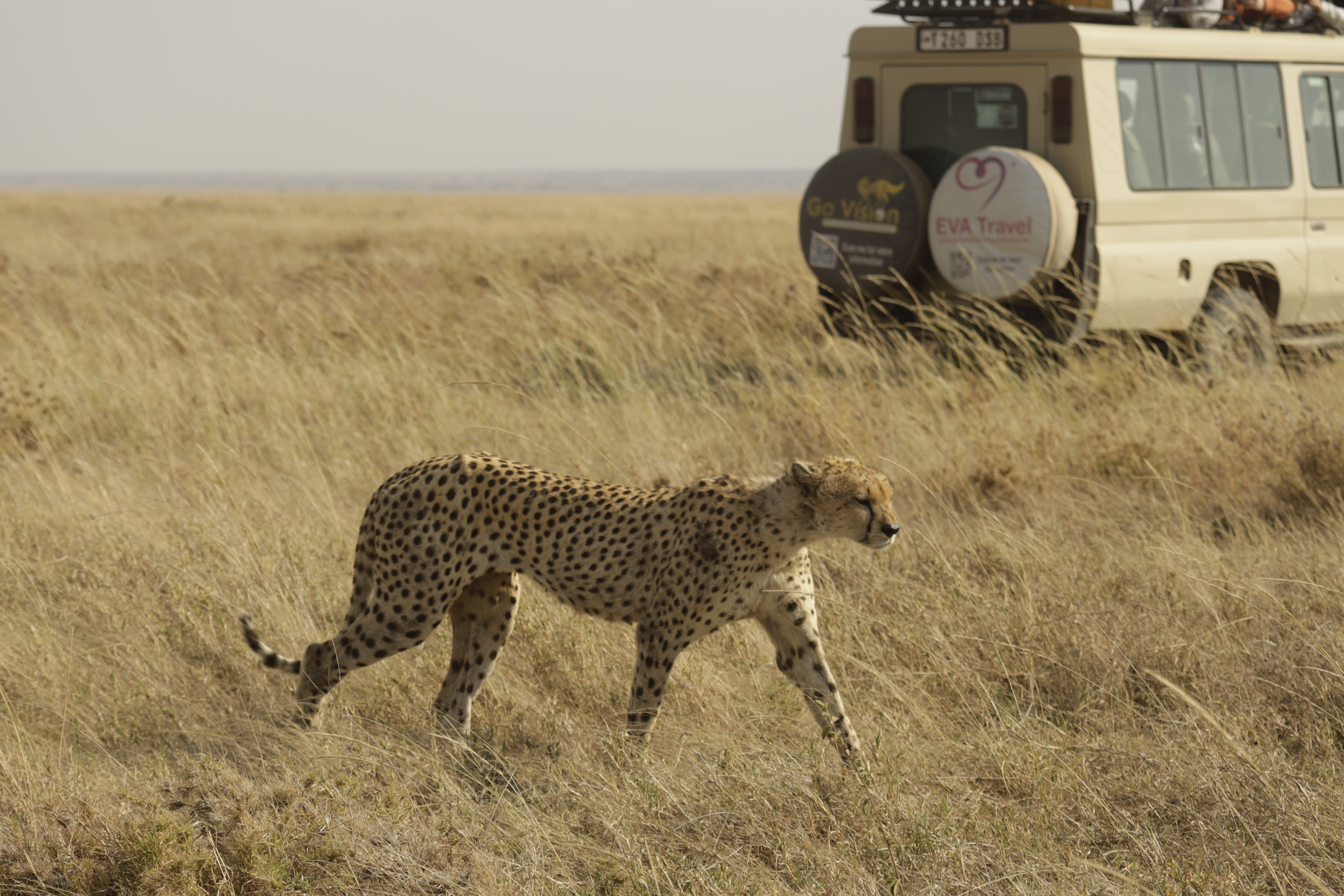
Vast Serengeti Landscapes
Open savannah, woodland, river valleys and rocky kopjes create remarkable scenery across Serengeti National Park and its surrounding ecosystem.
Explore Serengeti National Park on a private Tanzania safari through endless savannahs, legendary big-cat territory and the seasonal movement of the Great Wildebeest Migration. Go Vision Safaris creates tailor-made Serengeti journeys around your travel dates, wildlife interests and preferred pace.
Serengeti National Park is one of Tanzania’s most iconic safari destinations, known for vast grasslands, dramatic predator encounters and remarkable wildlife diversity across the year.
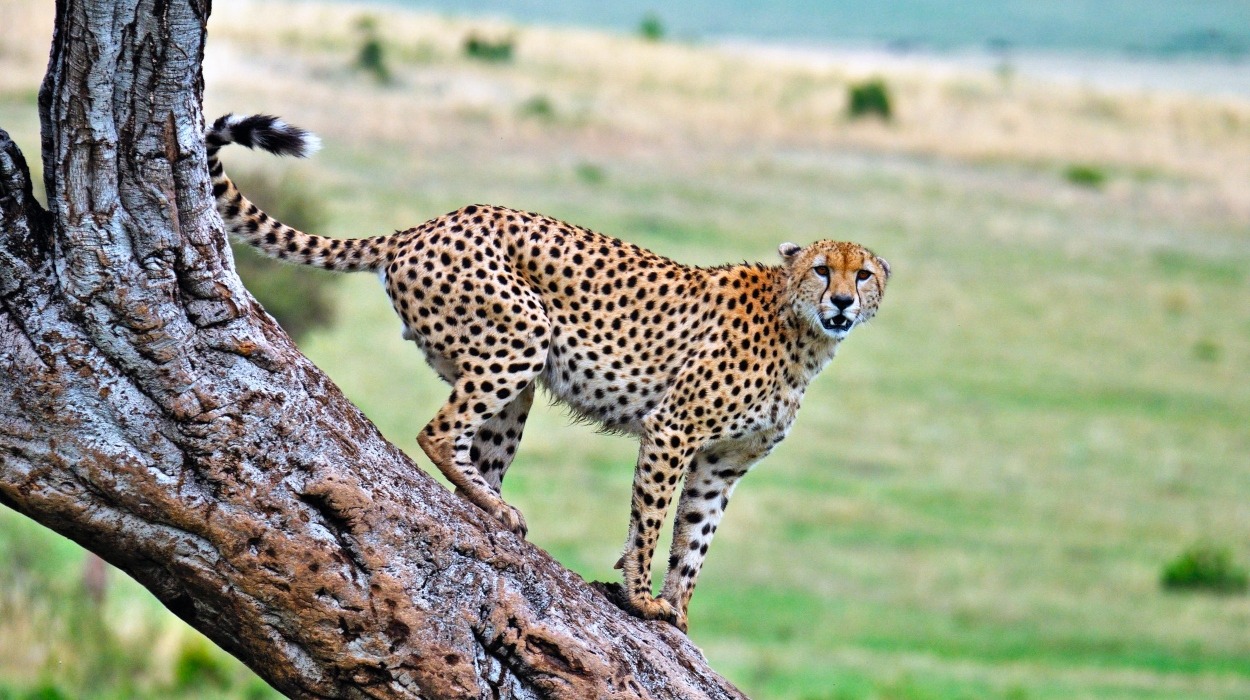
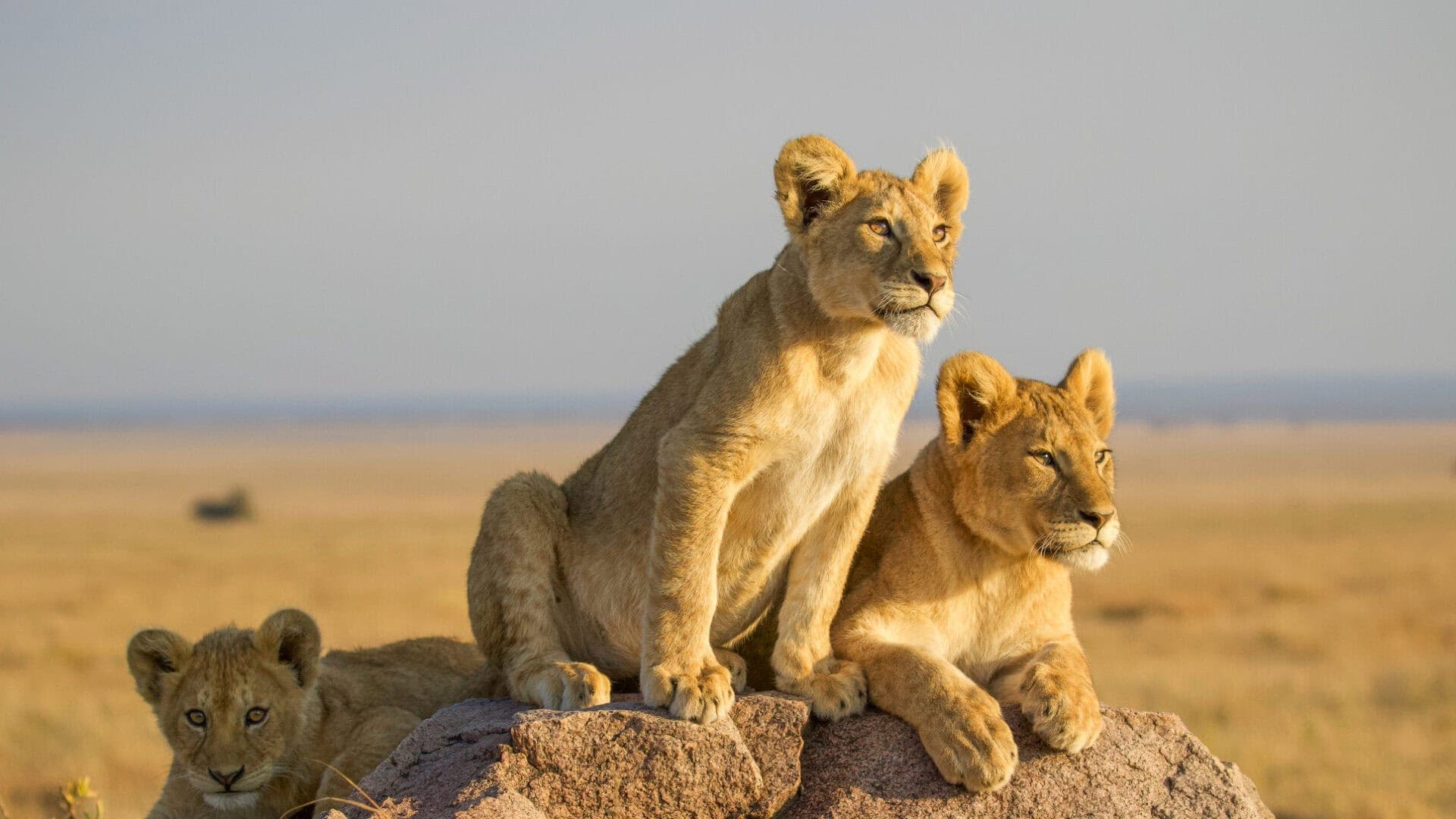
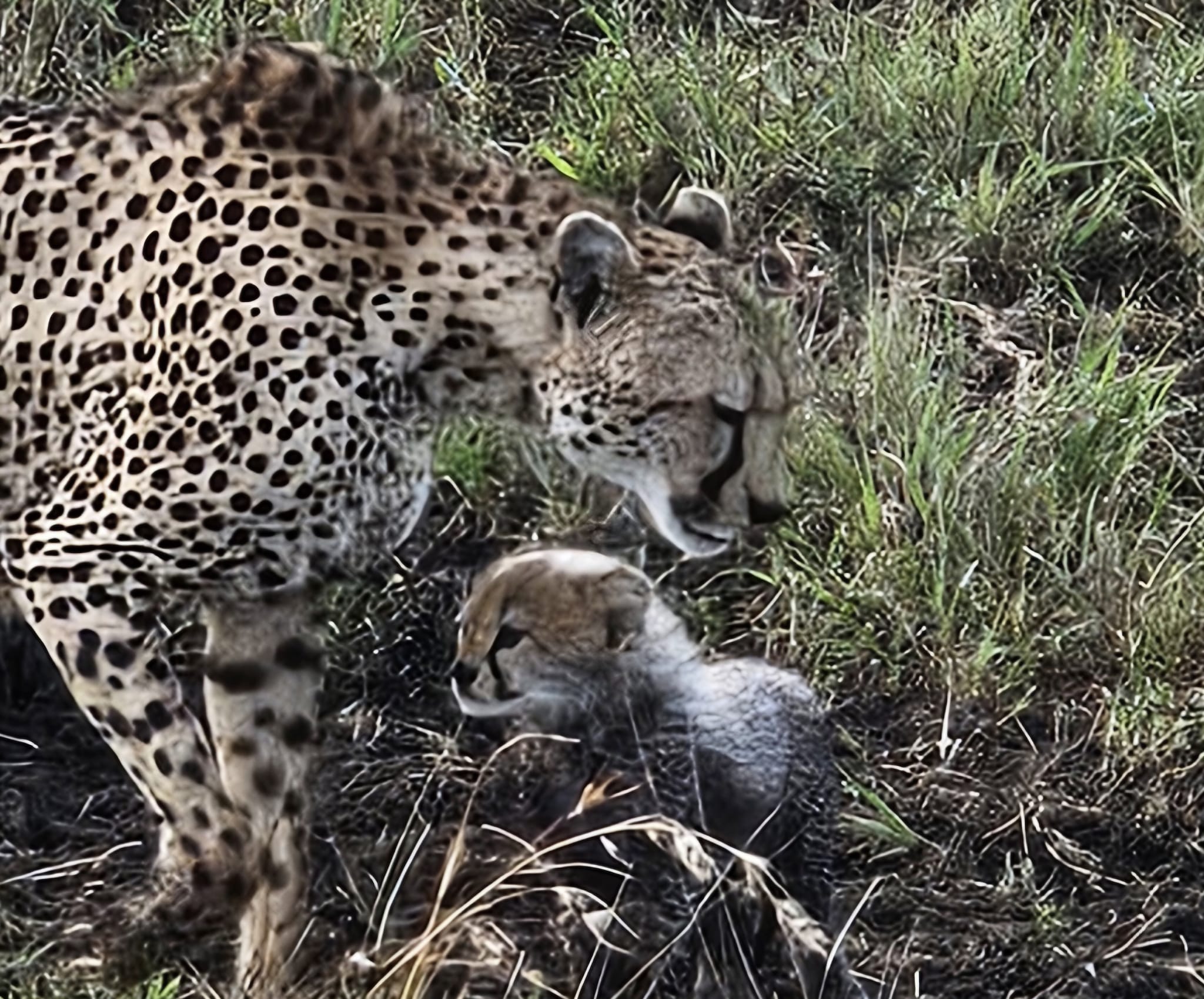
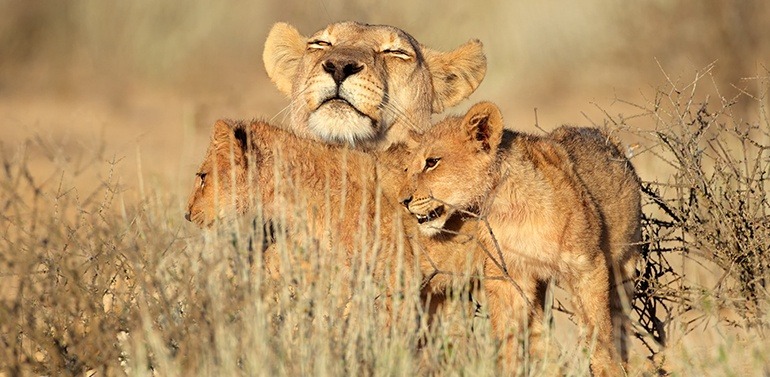
The Serengeti is famous for the Great Wildebeest Migration, but its appeal goes far beyond the movement of the herds. Lions patrol the plains, cheetahs scan open grasslands, elephants move between woodland areas and giraffes rise above the savannah.
Different regions of Serengeti National Park reveal different landscapes, wildlife concentrations and seasonal safari experiences. A well-planned Serengeti safari means choosing the right area, season and route for what you most want to see.
“The magic of the Serengeti is not found in one single moment. It is found in the scale of the landscape, the constant presence of wildlife and the feeling that nature is unfolding around you.
Open savannah, woodland, river valleys and rocky kopjes create remarkable scenery across Serengeti National Park and its surrounding ecosystem.
From lions, cheetahs and leopards to elephants, giraffes, buffalo and vast herds of plains game, Serengeti offers rewarding wildlife viewing throughout the safari year.
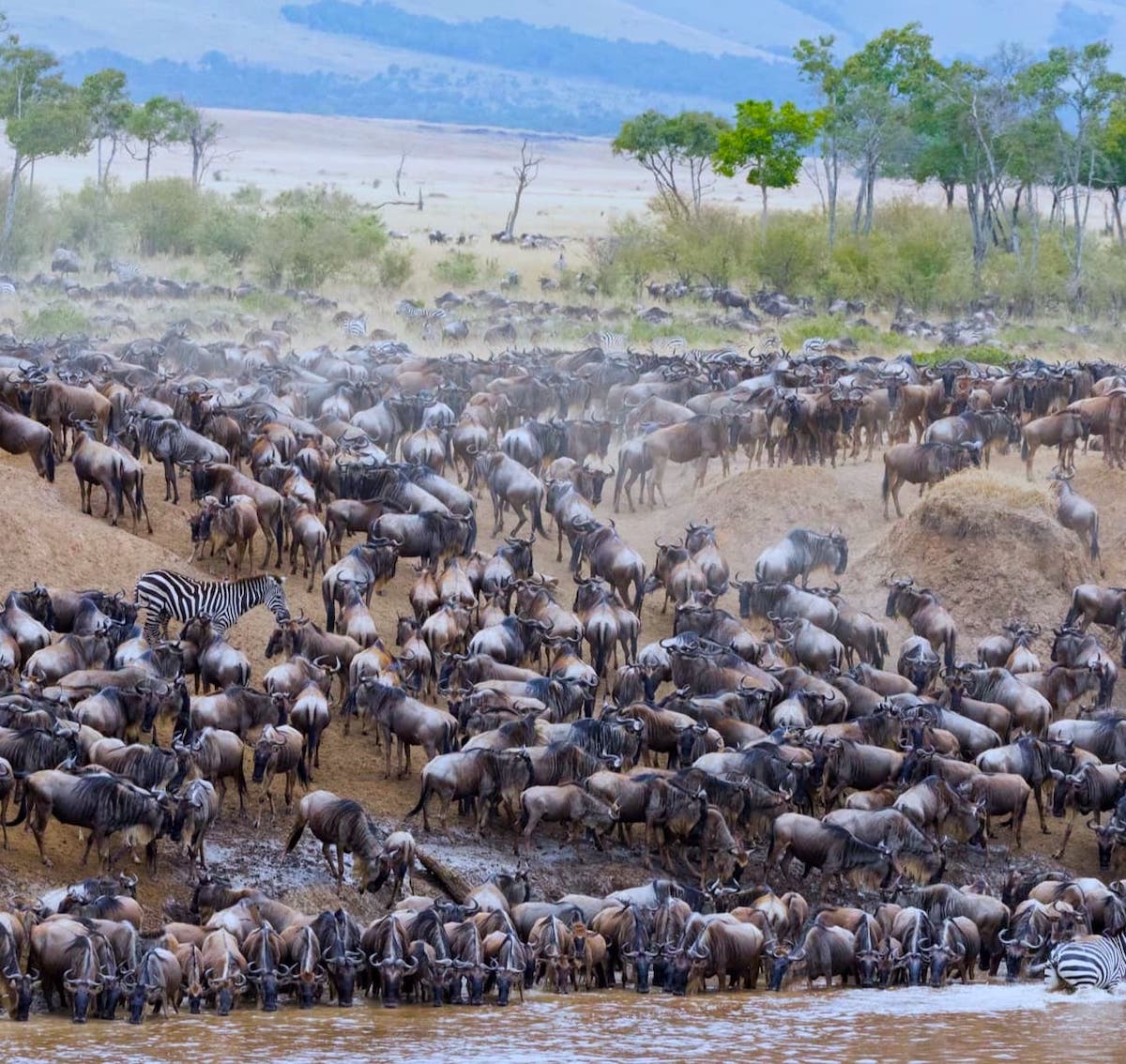
The seasonal movement of immense wildebeest herds across the Serengeti ecosystem creates one of Tanzania’s most celebrated safari experiences.
Explore Great Migration SafarisPair the Serengeti with Ngorongoro Crater, Tarangire National Park and other highlights of Tanzania’s Northern Safari Circuit for a more complete wildlife journey.
Serengeti National Park is one of Tanzania’s most important protected landscapes — a vast ecosystem of open plains, wildlife-rich habitats, big-cat territory and remarkable seasonal movement.
These Serengeti facts provide a quick introduction before we explore the Great Wildebeest Migration, wildlife, different park regions and the best ways to experience a Serengeti safari.
An immense protected area of savannah, woodland, rivers, rocky kopjes and wildlife habitat across northern Tanzania.
Serengeti National Park is internationally recognised for exceptional natural beauty, biodiversity and ecological importance.
Vast wildebeest herds move through the wider Serengeti ecosystem in response to seasonal rainfall, grazing and water availability.
Explore Great Migration SafarisLions, leopards, cheetahs and hyenas form part of one of Africa’s most remarkable predator-prey ecosystems.
Explore Serengeti WildlifeThe park supports exceptional resident and seasonal birdlife across grassland, woodland, riverine and wetland habitats.
Serengeti fits naturally into private safari routes combining Ngorongoro Crater, Tarangire and other highlights of Tanzania’s Northern Safari Circuit.
View Tanzania Safari ToursThe Great Wildebeest Migration is a continuous seasonal journey through the wider Serengeti ecosystem — not a single event, fixed location or one guaranteed river crossing.
View the Serengeti Migration Calendar
Across the year, immense wildebeest herds move through the Serengeti ecosystem alongside other plains wildlife, following seasonal rainfall, fresh grazing and access to water.
The migration is a living natural cycle, so herd locations can shift from year to year. Rainfall patterns, grass conditions and water availability influence where the wildebeest may be found at different times.
At different stages, travellers may encounter enormous herds on open plains, newborn calves during the southern season, intense predator activity or dramatic river-crossing attempts in the northern Serengeti.
A carefully planned Serengeti migration safari considers both the travel month and the region most likely to match the wildlife experience you hope to see.
Herd locations change throughout the year as wildlife follows rainfall and fresh grazing.
Calving, vast plains filled with herds and predator encounters are all part of the wider migration story.
Southern, central, western and northern Serengeti can offer very different migration experiences at different times.
Explore a Go Vision safari designed around the northern Serengeti during the migration season, with time positioned for the possibility of dramatic activity near the Mara River. Wildlife movements and river crossings are natural events and cannot be guaranteed.
Where might the Great Wildebeest Migration be during your Serengeti safari?
Wildebeest movement is shaped by rainfall, water and fresh grazing. This Serengeti migration calendar is therefore a planning guide, not a guarantee of exactly where the herds will be on a particular date.
Rainfall can move the herds earlier or later than expected. Go Vision Safaris can help select the Serengeti region that best matches your travel dates, migration interests and preferred safari pace.
During the early part of the year, large wildebeest herds are commonly found across the short-grass plains of the southern Serengeti and Ndutu ecosystem.
Fresh grazing attracts the migration herds, while the arrival of young calves often increases predator activity across the southern plains.
As seasonal conditions change, the herds often begin leaving the southern grasslands and moving toward central and western parts of the Serengeti ecosystem.
This transitional period can bring impressive concentrations of wildebeest moving together across the Serengeti landscape.
During this stage, many wildebeest herds may move through the Western Corridor as they continue their journey north.
River systems, woodland and open plains create a very different Serengeti environment from the short-grass landscapes experienced earlier in the year.
During this part of the year, many migration safaris focus on Northern Serengeti, where wildebeest herds may gather around the Mara River and surrounding grazing areas.
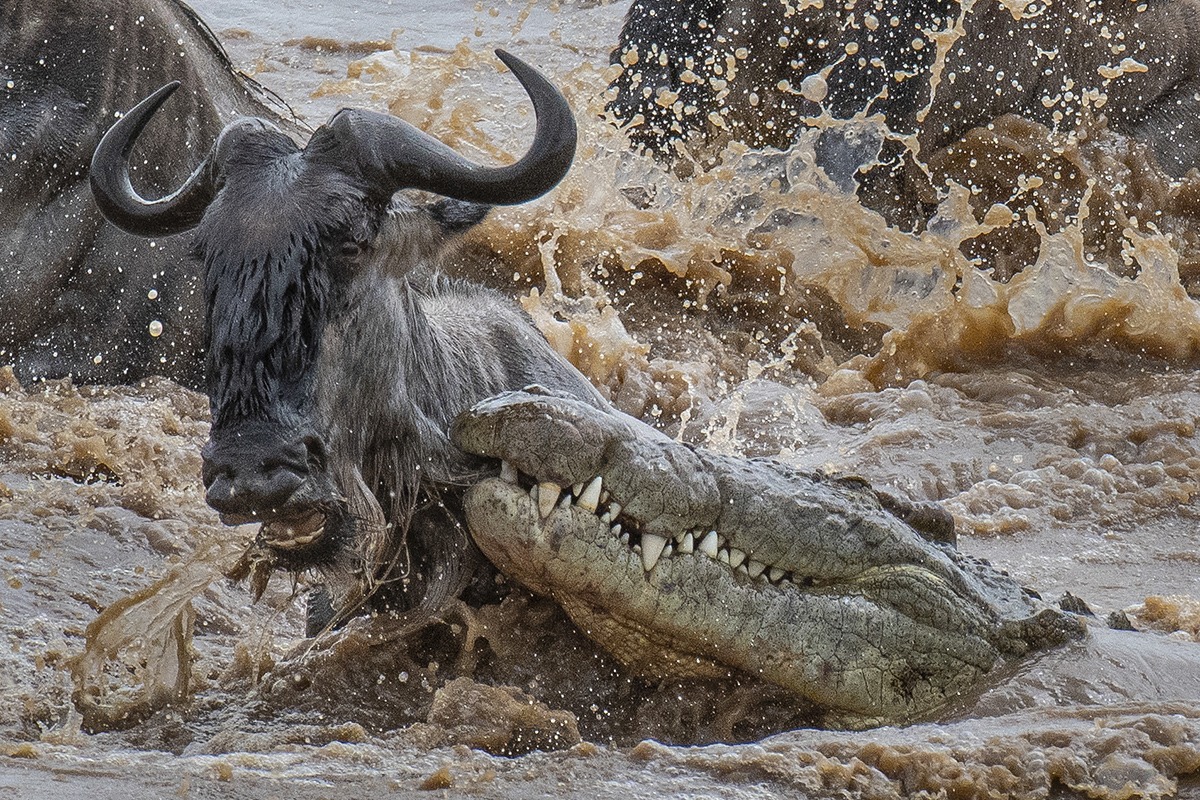
Mara River crossings are dramatic natural events, but their timing, location and frequency cannot be guaranteed. Spending enough time in Northern Serengeti can improve the overall safari experience.
As seasonal rains return, the migration often begins moving south through the Serengeti ecosystem toward fresh grazing.
The cycle gradually leads back toward the southern plains, preparing the landscape for another remarkable migration year.
Your Serengeti itinerary can be shaped around your travel month, wildlife interests and the regions offering the strongest seasonal migration possibilities.
Northern Serengeti is one of the park’s most remote and rewarding safari regions, with rolling grasslands, river systems, resident wildlife and seasonal Great Migration activity.
During parts of the migration season, large wildebeest herds may move through this region as they follow rainfall, fresh grazing and access to water around the Mara River.
Northern Serengeti is especially known for the migration stage when large wildebeest herds may gather across the northern plains and around the Mara River.
The landscape here is different from the vast, open short-grass plains farther south. Rolling savannah, riverine vegetation, rocky areas and quieter stretches of wilderness create a distinctive safari environment.
During a migration-focused safari, your private driver-guide can explore areas where the herds are currently moving while also searching for resident wildlife throughout the northern Serengeti.
MARA RIVER MIGRATION EXPERIENCE is one of the best-known migration locations, but a river crossing is never scheduled or guaranteed. Wildlife determines when, where and whether a crossing takes place.
Seasonal concentrations of wildebeest and zebra may move across the northern plains during the migration cycle.
Explore the river region where dramatic natural crossings may occur when herds gather and conditions encourage movement.
Northern Serengeti is still a wildlife destination beyond the migration itself, with predators and plains animals occupying the wider landscape.
Herds may spend hours or even longer close to the river before deciding whether to cross. They can also change direction unexpectedly or use a different crossing point.
For this reason, a Northern Serengeti migration safari should focus on the complete wildlife experience rather than treating one Mara River crossing as a guaranteed event.
Spend meaningful time exploring different areas rather than depending on one fixed wildlife location.
The northern plains themselves offer beautiful landscapes and rewarding wildlife viewing away from the main crossing areas.
Spending more than a brief visit in Northern Serengeti provides greater flexibility to respond to changing wildlife conditions.
Travel through Tarangire, Central Serengeti, Northern Serengeti and Ngorongoro, with extended safari time devoted to the northern migration region and areas around the Mara River.
At the heart of Serengeti National Park, Central Serengeti and the Seronera Valley deliver a classic Tanzania safari experience with varied habitats and rewarding wildlife viewing throughout the year.
Open plains, acacia woodland, rocky kopjes and riverine habitats create excellent conditions for game drives, big-cat searches and year-round Serengeti wildlife encounters.
Central Serengeti deserves dedicated safari time in its own right.
While the Great Wildebeest Migration moves through different parts of the wider ecosystem, Central Serengeti remains an important safari region because of its diverse landscapes, resident wildlife and excellent predator habitat.
The Seronera area provides access to open grasslands, riverine vegetation and scattered woodland. These changing habitats give private game drives excellent variety across the central plains.
Lions may rest near rocky outcrops, giraffes move between acacia trees, elephants cross open areas and smaller animals become part of the wider Serengeti story.
For travellers building a complete Serengeti itinerary, Central Serengeti connects naturally with northern, western or southern regions depending on the season, wildlife movement and safari route.
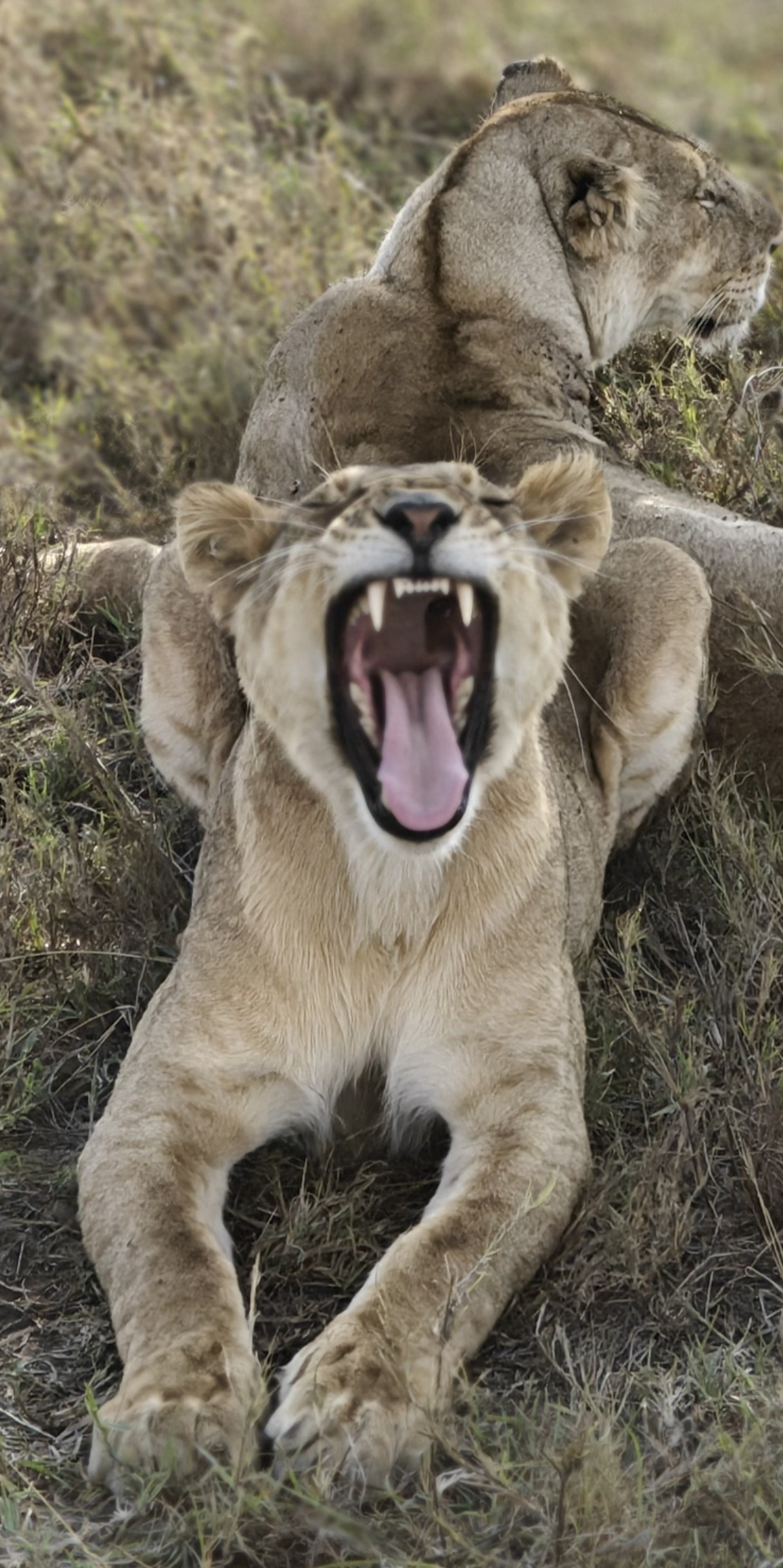
Classic Serengeti scenery combines sweeping grasslands with scattered trees, seasonal waterways and distant horizons.
Central Serengeti is one of the best regions for travellers hoping to search for lions, leopards, cheetahs and other predators across varied habitats.
Explore Serengeti WildlifeGranite outcrops rise dramatically above sections of the plains, adding character to the landscape and creating excellent places to scan for wildlife.
Central Serengeti can form an important part of a Tanzania safari throughout the year, rather than being considered only during migration season.
Explore Tanzania Safari ToursSeronera sits within Central Serengeti and is an important base for planning game drives through the centre of Serengeti National Park.
Rather than rushing through on the way north or south, allowing dedicated time in Seronera gives your driver-guide greater flexibility to follow current wildlife activity.
Search open plains, shade and rocky areas during morning and afternoon game drives.
Woodland and riverine environments can provide opportunities for patient leopard searches.
Open country provides the kind of long sightlines that make searching the plains part of the adventure.
Central Serengeti combines naturally with Tarangire, Ngorongoro Crater and other highlights of Tanzania’s Northern Safari Circuit.
Early in the year, the Southern Serengeti and wider Ndutu ecosystem transform into fresh green plains filled with immense wildebeest herds, newborn calves and intense wildlife activity.
This is one of the most fascinating chapters of the Great Wildebeest Migration — very different from the Mara River season, yet equally rewarding for wildlife viewing and photography.
The southern Serengeti and Ndutu ecosystem become especially important when seasonal rains create fresh, nutrient-rich grass across the short-grass plains.
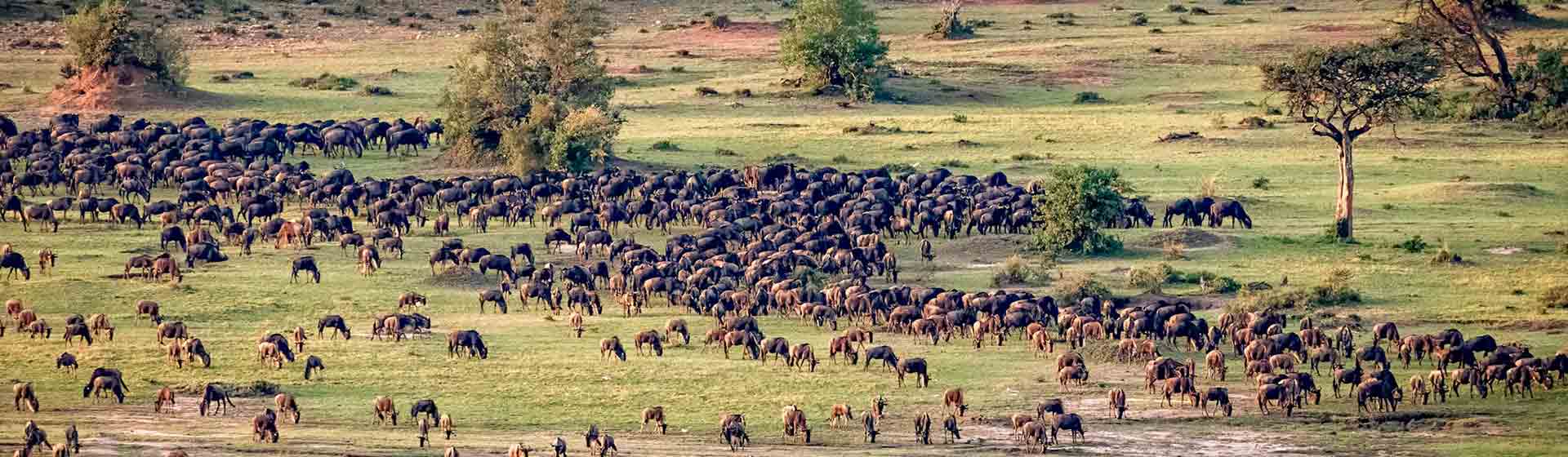
Large numbers of wildebeest may gather throughout the broader southern ecosystem as the herds take advantage of fresh grazing and water.
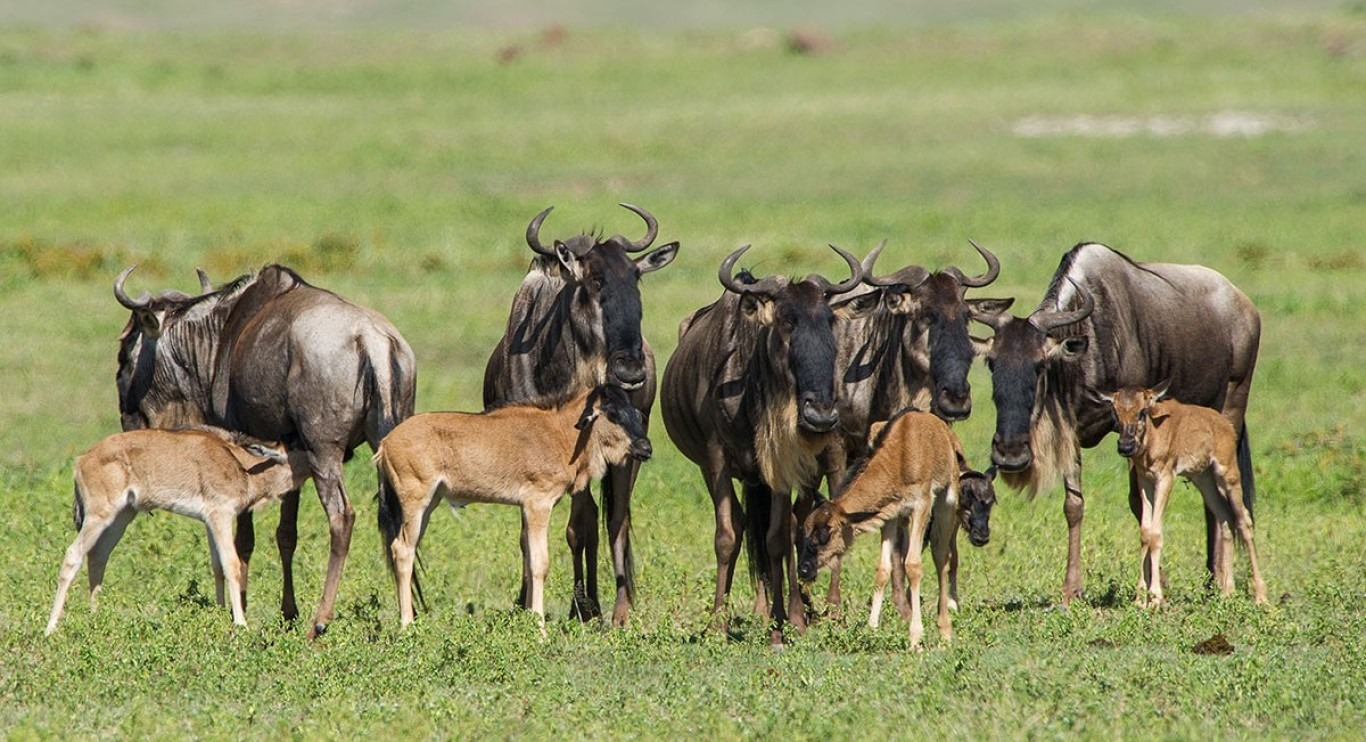
This period is widely associated with the wildebeest calving season. Young animals appear across the plains, bringing extraordinary movement, new life and dramatic wildlife interactions to the landscape.
The presence of vulnerable young animals can also increase predator activity. Lions, cheetahs, hyenas and other hunters become part of the natural drama unfolding around the migrating herds.
A useful planning window for Southern Serengeti migration and calving safaris, although rainfall and natural herd movement determine exact conditions.
Large concentrations of wildebeest can create extraordinary wildlife scenes across the open southern plains.
Calving brings a completely different character to a Serengeti migration safari, with newborn wildebeest appearing among the herds.
The concentration of grazing animals can attract lions, cheetahs, hyenas and other predators into the wider wildlife story.
Seasonal rains transform parts of the southern ecosystem into richly coloured grasslands ideal for dramatic safari photography.
From vast wildebeest herds and newborn wildlife to the predators that follow the migration across the southern plains, these Go Vision media images reflect the character of Serengeti calving season.
Both reveal the Great Wildebeest Migration, but they offer very different Serengeti safari experiences.
Think large herds, young animals, fresh grass, predators and expansive green landscapes.
View Serengeti Migration CalendarThink northern plains, large moving herds and the possibility of dramatic natural river crossing activity.
Explore Northern SerengetiTell Go Vision Safaris your exact travel dates. Our Tanzania-based team can shape your itinerary around the Serengeti regions and wildlife experiences that best suit that time of year.
Early in the year, the southern Serengeti ecosystem becomes one of the most fascinating places to follow the story of the Great Migration.
Seasonal rains transform the short-grass plains, attracting large concentrations of wildebeest and other grazing animals into this open landscape.
View Migration CalendarCalving season adds another dimension to the Serengeti migration — vast herds, young wildebeest and intense wildlife activity sharing the same open grasslands.
During this stage of the migration cycle, large numbers of wildebeest gather across the southern short-grass plains where fresh grazing provides important feeding opportunities.
The presence of newborn animals naturally attracts attention from predators. Lions, cheetahs, hyenas and other hunters form part of the complex predator-prey relationships that define the Serengeti ecosystem.
For photographers and travellers interested in more than river crossings, this season reveals a very different side of the Great Migration.
Seasonal rainfall refreshes the southern grasslands and helps draw large grazing herds into the region.
January and February are particularly associated with the Serengeti's calving period.
The gathering of prey across open country creates opportunities to observe the Serengeti's predator-prey relationships.
Travellers visiting during this period may encounter large herds spread across greener southern plains, young animals and the predators that follow the wider migration.
Large concentrations of wildebeest can transform the open plains into an extraordinary wildlife landscape.
Calving season brings a completely different atmosphere to the migration compared with northern river-crossing months.
Open grasslands and abundant prey make predator observation an important part of the safari experience.
Green landscapes, moving herds and dramatic wildlife interactions create varied photographic opportunities.
During the southern migration season, wildlife can spread across a broad area of the Serengeti ecosystem. Conditions change from year to year, so routes should remain flexible wherever possible.
Tell Go Vision when you plan to travel and the wildlife experiences you hope to see. Your route can then be shaped around the most relevant Serengeti regions.
Western Serengeti reveals another side of the park — a landscape of river systems, woodland, open savannah and seasonal Great Great Migration Herds movement through the Western Corridor.
During part of the Great Migration cycle, large wildebeest herds may travel through the western region and around the Grumeti River as they continue their seasonal journey north.
View Serengeti Migration Calendar
Western Serengeti forms an important chapter in the wider Great Great Migration Herds story and offers a different safari atmosphere from the southern and central plains.
As seasonal conditions change, wildebeest herds may move away from the southern and central plains toward the Western Corridor and Grumeti region.
This region feels noticeably different from the short-grass plains of the south. Woodland, open savannah and river systems create a more varied safari landscape.
THE GRUMETI RIVER · WESTERN SERENGETI is one of the defining natural features of this western migration route, adding riverine habitat and a distinctive landscape to a Serengeti safari.
Seasonal herd movement can bring large concentrations of wildebeest through western parts of the ecosystem.
A major river feature that helps define the landscape of Western Serengeti.
Open grassland, woodland and riverine vegetation create a different environment from other Serengeti regions.
River systems influence vegetation and wildlife distribution across Western Serengeti, creating greener corridors through the surrounding savannah and woodland.
During seasonal migration periods, the wider western region can become part of the wildebeest herds’ northward journey as they continue following suitable grazing and water.
Waterways and riverine vegetation introduce greener, more sheltered environments into the western landscape.
Tree-lined areas mix with open country, creating changing scenery during game drives.
Wildebeest may pass through the western corridor during one stage of their annual journey.
The herds continue moving through different parts of the ecosystem as natural conditions change throughout the year.
Different parts of the Serengeti can offer very different wildlife and landscape experiences depending on your travel dates.
Combine Western Serengeti with Central or Northern Serengeti, Ngorongoro Crater, Tarangire and other highlights of Tanzania’s Northern Safari Circuit.
Serengeti National Park is much more than the Great Wildebeest Migration. Its plains, woodlands, river systems and rocky kopjes support exceptional wildlife throughout the year.
From lions, leopards and cheetahs to elephants, giraffes, buffalo and vast grazing herds, every game drive reveals another part of one of Africa’s most remarkable safari ecosystems.
The Serengeti supports an exceptional mix of big cats, grazing herds, browsers, large mammals and more than 500 recorded bird species.
Wildebeest dominate the Great Migration story, while resident wildlife keeps Serengeti rewarding throughout the safari year.
Lions may rest around rocky kopjes, giraffes move between acacias, elephants travel through woodland and cheetahs scan the open plains.
Leopards, buffalo, gazelles, hyenas, hippos and many smaller species add even greater diversity to the Serengeti safari experience.
Lions, leopards and cheetahs are among the Serengeti's most sought-after wildlife sightings.
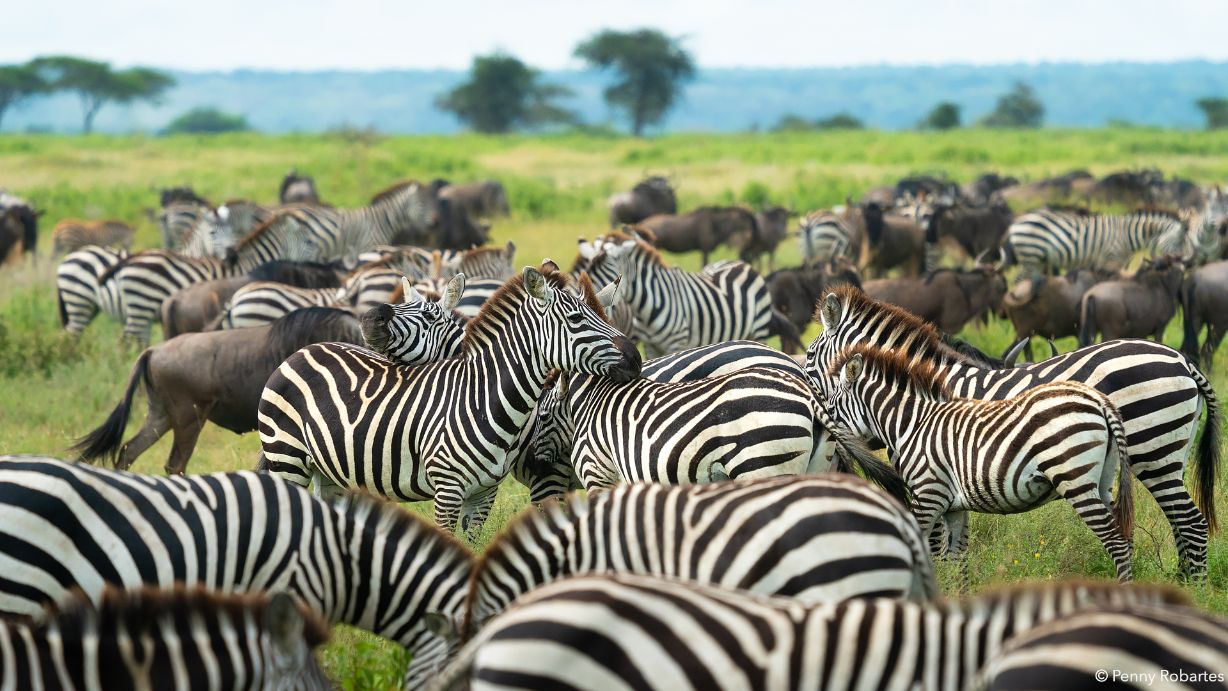
Wildebeest, zebra, buffalo and gazelles bring constant movement to the plains.
Serengeti remains an important wildlife destination even when the largest migration herds are elsewhere.
One of the defining predators of the Serengeti, often encountered around plains, kopjes and areas rich in prey.
Patient searching around woodland and riverine environments may reveal this famously elusive cat.
The Serengeti's open landscapes provide ideal country for watching one of Africa's fastest hunters.
The iconic animal of the Great Wildebeest Migration and one of the Serengeti ecosystem’s most recognizable species.
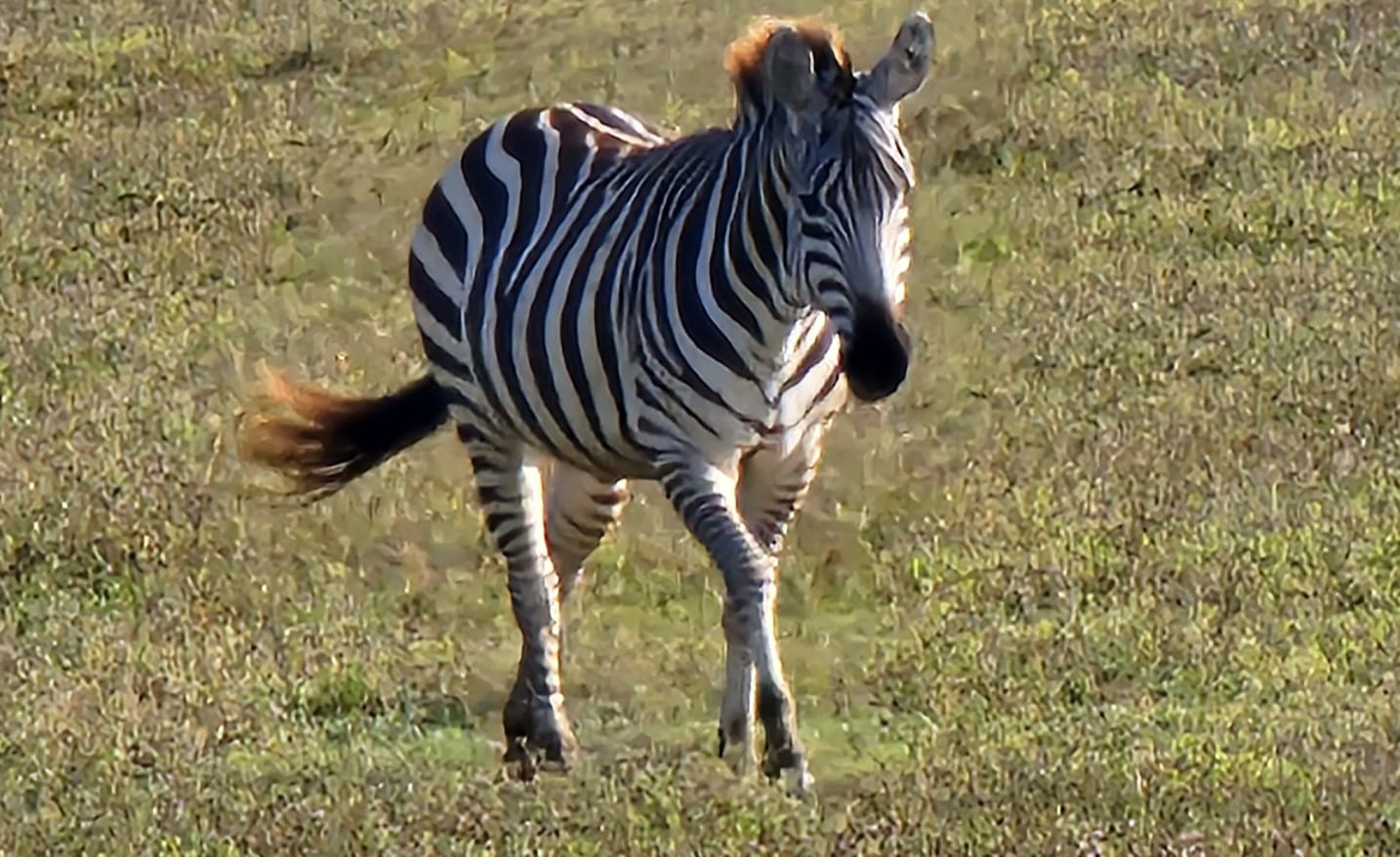
Zebra frequently accompany wildebeest and contribute to the enormous moving herds of the migration.
Giraffes create unforgettable silhouettes as they move through acacia woodland and open country.
Elephants can be encountered moving through woodland, river environments and other parts of the park.
Powerful and impressive, buffalo are another important part of Serengeti's diverse wildlife community.
Lions, leopards and cheetahs occupy different habitats throughout the Serengeti. Their presence is closely connected to the abundance of prey across this productive ecosystem.
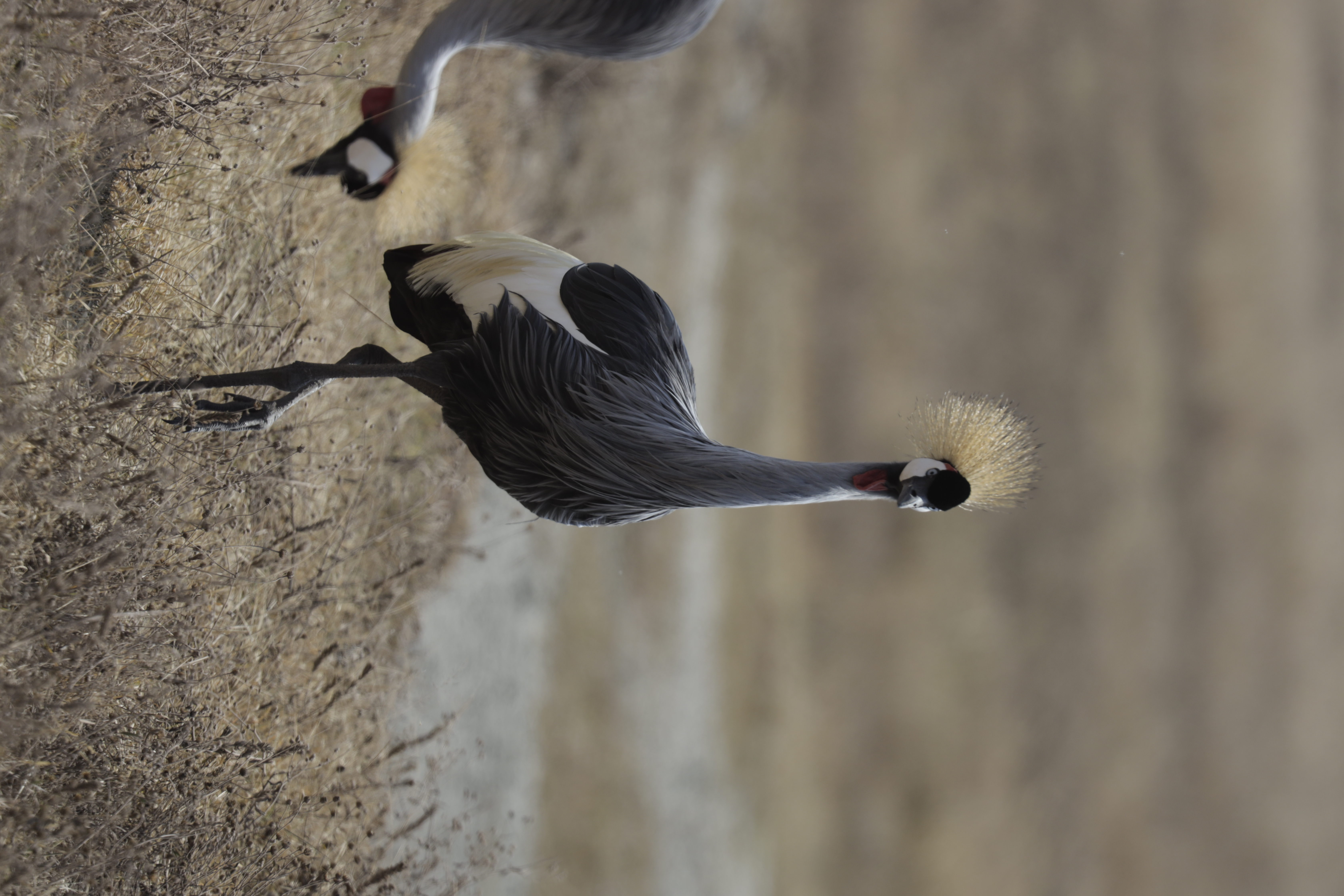
Discover Serengeti Serengeti Big CatsRaptors, vultures, ostriches, waterbirds and hundreds of smaller species make Serengeti rewarding for both dedicated birders and casual wildlife enthusiasts.
Explore Go Vision Safaris journeys combining Serengeti National Park with Ngorongoro Crater, Tarangire and other highlights of Tanzania’s Northern Safari Circuit.
The Serengeti is one of Africa’s most celebrated destinations for watching lions, leopards and cheetahs in their natural habitat.
From powerful lion prides to elusive leopards and fast-moving cheetahs, a Serengeti safari offers exceptional opportunities for close wildlife observation while respecting the animals and their environment.
11
The Serengeti provides one of the finest settings in Tanzania for observing Africa’s great cats in the wild.
Wildlife sightings are never guaranteed, but the park’s open plains, woodland areas and abundant prey create an exceptional environment for searching for lions, leopards and cheetahs throughout the year.
Watch prides resting, travelling and hunting across the Serengeti plains, often near areas where prey gathers.
Search the riverine forests and woodland for this elusive big cat, often found resting in trees or moving quietly through cover.
Look across open grasslands for cheetahs, whose speed and hunting behaviour make every sighting especially memorable.
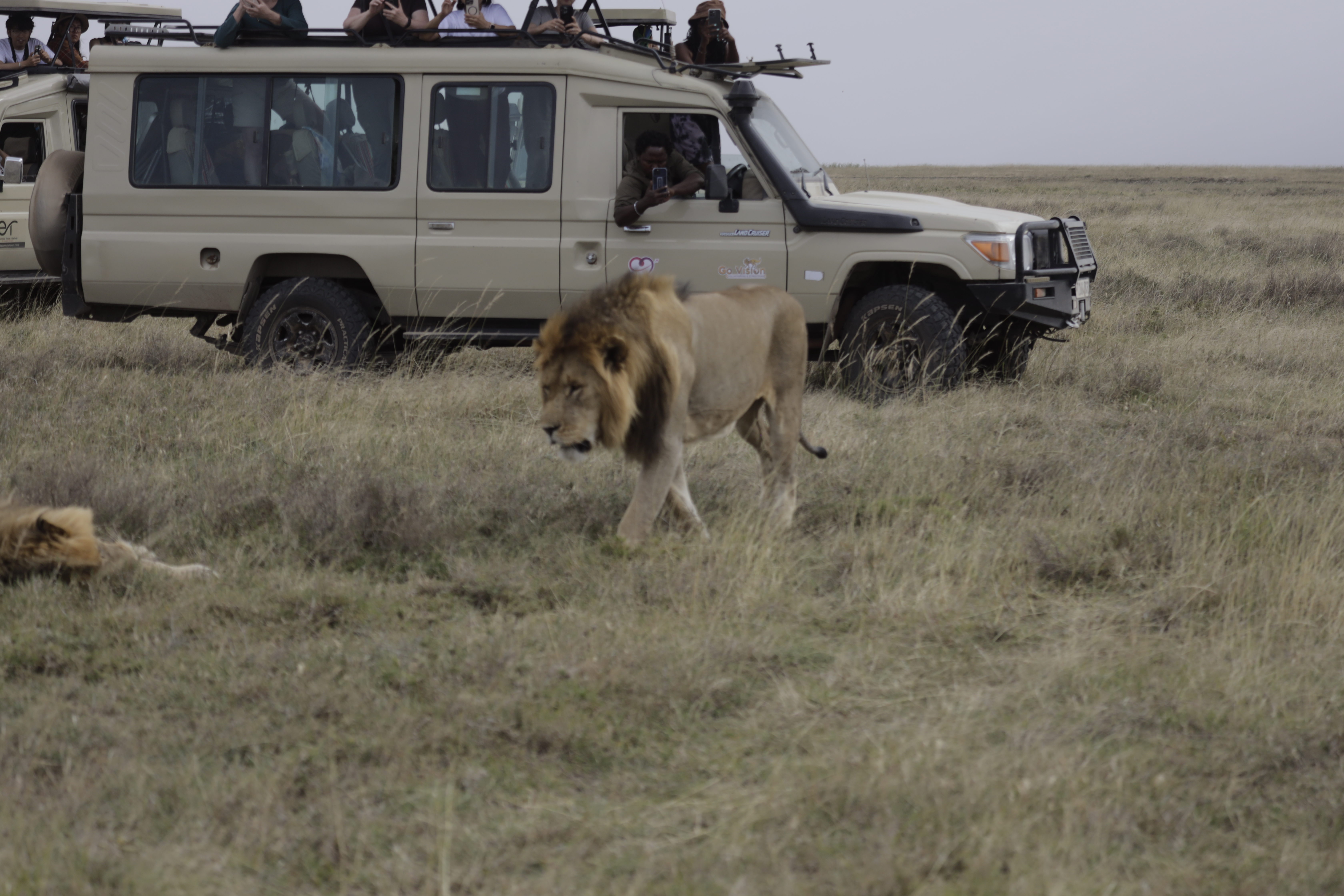
A good big-cat safari is about more than ticking animals off a list. Your driver-guide reads tracks, behaviour and the landscape to help position the vehicle responsibly and give you time to observe natural wildlife behaviour.
Talk to Go Vision Safaris about a private Tanzania safari designed around your interests, travel dates and preferred wildlife experiences.
The Serengeti is famous for its immense open plains, but its landscapes are far more diverse than the iconic horizon first suggests.
From golden grasslands and granite kopjes to river corridors, acacia woodland and rolling northern country, every drive reveals another character of this extraordinary ecosystem.
The landscape itself is part of the Serengeti safari experience.
Across the park, open plains give way to rocky formations, scattered trees, seasonal waterways and greener habitats. These changes make every game drive visually different.
The landscape also influences wildlife movement. Open country provides grazing grounds and enormous visibility, while rivers, woodland and rocky areas offer shade, shelter and different feeding habitats.
Experiencing these changing environments gives travellers a deeper understanding of Serengeti as a complete living ecosystem rather than simply a destination for wildlife sightings.
Discover Serengeti National Park →Vast open plains create the Serengeti's most recognizable scenery, offering extraordinary visibility and expansive wildlife views.
Explore the southern plains →Ancient rocky outcrops rise above the grasslands, creating dramatic landmarks and important wildlife habitats.
Explore central Serengeti →River systems bring greener vegetation into the surrounding landscape and create important areas for wildlife.
Explore western Serengeti →Scattered trees and woodland create a beautiful contrast to the open savannah and support a different mix of wildlife.
Explore northern Serengeti →Kopjes are among the most distinctive features of the Serengeti. These granite formations appear like islands surrounded by an ocean of grass.
Their elevated surfaces provide shade, shelter and viewpoints for wildlife, making them fascinating places to observe during a game drive.
Explore the Serengeti →Travelling through different parts of Serengeti reveals how dramatically the scenery can change within one protected ecosystem.
Each region offers a different combination of scenery, habitat and safari atmosphere.
Wildlife may be the reason travellers dream about Serengeti, but the scale of the landscape often becomes one of the strongest memories of the journey.
Wide horizons, dramatic skies, lone acacias and wildlife moving through open country create exceptional opportunities for safari photography.
Explore photographic safari experiences →
A Serengeti safari combines wildlife, scenery, changing light and the feeling of travelling through one of Africa's most extraordinary natural landscapes.
With Go Vision Safaris, the landscape becomes part of the experience from the moment you enter the park to the final horizon of the day.
View Tanzania Safaris →Combine Serengeti with Ngorongoro, Tarangire, Kilimanjaro or Zanzibar to create a richer Tanzania travel experience.
The Serengeti is not simply somewhere to see wildlife. It is a landscape to explore slowly, observe carefully and experience from different perspectives.
Classic game drives remain at the heart of a Serengeti safari, but photography, seasonal migration viewing and time spent exploring different park regions can make the journey far richer.
One of the best ways to experience Serengeti is to give the landscape and wildlife enough time.
Morning and afternoon game drives can reveal completely different wildlife behaviour as temperatures, light and animal activity change throughout the day.
Some days may focus on big cats, while others are shaped by elephants, giraffes, migration herds, birdlife or simply the atmosphere of travelling through immense open country.
A well-designed Serengeti safari balances wildlife searching with enough flexibility to respond to what is happening naturally around you.
Explore different habitats with time to follow wildlife activity rather than rushing between sightings.
Photograph predators, migration herds, landscapes and smaller moments throughout the safari day.
Shape your route around northern, central, western or southern Serengeti according to the season.
Search the plains, kopjes, woodland and river systems for lions, leopards, cheetahs, elephants, giraffes, buffalo and many other Serengeti species.
Plan the Serengeti region around your travel season for opportunities to experience different stages of the migration cycle.
Migration Calendar →Spend time watching prides, herds and individual animals rather than treating wildlife as a checklist.
Capture wide Serengeti horizons, dramatic skies, big cats, migration herds and quieter details throughout the ecosystem.
Discover how Southern, Central, Western and Northern Serengeti offer different scenery and wildlife experiences.
Look beyond the large mammals and discover raptors, vultures, ostriches, waterbirds and many smaller species.
Travelling by safari vehicle allows you to cover different habitats while carrying camera equipment, binoculars and everything needed for a full wildlife day.
A knowledgeable guide can interpret tracks, animal behaviour and current wildlife activity while adjusting the route as conditions change.
Serengeti experiences change throughout the year. Your travel dates can help determine which regions deserve the most time in your itinerary.
Different parts of Serengeti can be combined depending on wildlife movement, season and the amount of time available.
Explore safari itineraries combining Serengeti with Ngorongoro, Tarangire and other destinations across Tanzania.
The Serengeti is famous for its vast open plains, but its character is shaped by far more than grassland.
From ancient granite kopjes and acacia woodland to river corridors, seasonal watercourses and immense savannah horizons, every landscape creates a different safari experience.
A Serengeti safari changes constantly as the scenery and habitat unfold around you.
One moment you may be crossing an open grassland where the horizon seems endless. A little farther on, scattered acacias, granite outcrops or greener river vegetation can completely transform the view.
These landscapes are not simply beautiful backdrops. They influence how wildlife moves, where animals find food and water, and where predators may wait for an opportunity.
This is what makes travelling through Serengeti so rewarding: you are experiencing an interconnected ecosystem rather than simply moving between wildlife sightings.
Immense open plains define much of the Serengeti and create extraordinary long-distance views across the savannah.
Explore the Migration →Ancient rocky formations rise above the grasslands, creating distinctive landmarks and important habitat for wildlife.
Discover Serengeti Wildlife →Rivers and drainage systems create greener habitats that attract wildlife and bring another dimension to the Serengeti scenery.
Explore the Waterways →Scattered trees and woodland areas contrast with the open plains and provide shelter, shade and habitat for many species.
Discover Serengeti Habitat →Kopjes are among the most recognizable features of the Serengeti. These weathered granite formations appear like islands surrounded by golden grassland.
Their rocks provide shade, shelter and elevated viewpoints for wildlife. Spending time around a kopje can therefore reveal both dramatic scenery and rewarding animal encounters.
Discover wildlife around the kopjes →Travelling through different parts of the Serengeti reveals why this protected area should be experienced as a complete ecosystem rather than one single endless plain.
Plan a Serengeti Safari →Different areas of Serengeti offer different scenery, habitats and seasonal wildlife experiences.
Wildlife may be the reason you first dream about Serengeti, but the scale of the landscape often becomes one of the strongest memories of the journey.
Wide horizons, dramatic skies, lone acacias and wildlife moving through vast open space create exceptional opportunities for photography.
Explore Serengeti Photography →Combine Serengeti with Ngorongoro, Tarangire, Kilimanjaro or Zanzibar for a richer Tanzania travel experience.
There is no single perfect month to visit the Serengeti. The best time depends on the wildlife, landscapes and seasonal experiences you want to see.
Calving, migration movement, green-season scenery and classic dry-season wildlife viewing each reveal a different side of Serengeti National Park.
Explore Migration Calendar →
Your travel dates can help determine which Serengeti region should receive the most time in your itinerary.
Travellers interested in calving may focus on the southern ecosystem early in the year. Later seasons can bring greater attention to central, western and northern Serengeti.
The dry season offers another atmosphere entirely, with changing vegetation, concentrated wildlife activity and classic African safari scenery.
The Great Migration is a natural cycle. Exact herd locations and river-crossing dates cannot be guaranteed.
Early in the year is closely associated with calving and large seasonal herds across the southern Serengeti ecosystem.
Seasonal rains transform the Serengeti into a greener landscape while wildlife movement continues through the wider ecosystem.
The main dry-season period offers classic safari conditions and important seasonal movement through different Serengeti regions.
Seasonal rainfall begins refreshing parts of the ecosystem while wildlife continues its natural movement toward southern grazing areas.
Rather than asking only for the best month, begin with the experience that matters most to you.
Consider January–February.
Ideal for rich scenery and photography.
June–October offers classic dry conditions.
Match your region to your travel month.
Migration-focused itineraries should follow likely seasonal movement while remaining flexible enough for nature to determine the final experience.
Go Vision Safaris can design your route around your month of travel, wildlife interests and the Tanzania destinations you want to combine.
Two days can introduce you to the Serengeti. Three or four days can allow you to experience it at a far more rewarding pace.
The ideal length depends on your overall Tanzania itinerary, travel season, wildlife priorities and how many Serengeti regions you want to explore.
Serengeti National Park is enormous, and wildlife experiences rarely happen according to a fixed schedule.
Spending more than one day gives your guide greater flexibility to follow wildlife activity, revisit promising areas and explore different habitats.
It also reduces the need to treat every game drive as a race between famous sightings.
For migration-focused safaris, extra time can be especially valuable because herd locations and animal behaviour naturally change.
If Serengeti is the main reason for your Tanzania journey, give it more time rather than trying to include too many destinations in too few days.
Suitable when Serengeti forms part of a shorter northern Tanzania safari and your itinerary also includes destinations such as Ngorongoro or Tarangire.
Three days creates a more relaxed Serengeti experience and gives your guide greater flexibility to respond to wildlife conditions.
Longer stays are ideal when Serengeti is the centrepiece of your journey or when seasonal movement encourages exploration of more than one region.
Longer stays create room for patience, flexibility and unexpected moments — often the ingredients behind the best safari experiences.
Different mornings and afternoons can reveal entirely different animal behaviour.
Extra time gives photographers more chances for strong light, behaviour and positioning.
Migration movement can make flexibility especially valuable during seasonal safaris.
A slower pace creates more time to appreciate landscapes and wildlife rather than simply moving between destinations.
Depending on your season, additional time may allow Central Serengeti to be combined with Southern, Western or Northern Serengeti.
A well-planned northern Tanzania safari can combine Serengeti with Ngorongoro Crater, Tarangire and other destinations without sacrificing the time needed for meaningful wildlife viewing.
Explore Tanzania Safari Itineraries →Go Vision Safaris can help balance Serengeti with the rest of your Tanzania journey according to your available time, interests and travel season.
Reaching the Serengeti can be part of the safari experience itself — whether you travel overland through Tanzania’s northern circuit or fly closer to the wilderness.
The best option depends on your available time, safari route, season and which Serengeti region you plan to explore.
Serengeti fits naturally into Tanzania’s northern safari circuit.
Many Go Vision itineraries approach the Serengeti by safari vehicle, allowing the journey to connect naturally with destinations such as Tarangire and Ngorongoro.
Travellers with less time may prefer a regional flight, reducing long overland transfers and allowing more of the itinerary to be spent inside the safari region.
A combination of road and air can also work especially well for longer Tanzania journeys or itineraries that continue onward to another part of the country.
Travel through the northern circuit and experience changing landscapes along the way.
Regional flights can reduce overland travel and bring you closer to your chosen Serengeti region.
Combining both can create an efficient itinerary while preserving the classic northern-circuit safari experience.
An overland safari allows the scenery to change gradually as you move deeper into northern Tanzania.
It works especially well when Serengeti is combined with other major wildlife destinations along the northern circuit.
Regional air services can be useful when your priority is reducing long road transfers.
This style can also work well when your itinerary focuses on a particular Serengeti region.
A combination itinerary can offer the best of both approaches: scenic overland safari travel followed by a flight when it improves the journey.
Go Vision can shape the balance around your available days and the destinations you want to include.
One of the strengths of travelling overland is the ability to connect several of northern Tanzania’s most important safari destinations into one journey.
Serengeti is enormous. Your entry route should make sense for the region you want to explore and the season of your safari.
Many northern Tanzania safari journeys are organized around Arusha before continuing toward the national parks.
Go Vision can structure the safari route so that transfers, park visits and travel days work naturally together rather than feeling disconnected.
Serengeti can form part of a broader Tanzania trip that also includes Kilimanjaro or other destinations.
We design the travel sequence around your available time instead of forcing every journey into the same fixed route.
Share your dates, safari interests and destinations and Go Vision Safaris can help create a logical Serengeti route.
Choose a Tanzania safari that gives the Serengeti the time it deserves — from wildlife-focused journeys to migration adventures and safari-and-beach escapes.
These Go Vision itineraries combine Serengeti with some of Tanzania's other outstanding destinations, including Ngorongoro, Tarangire and Zanzibar.
Your ideal itinerary depends on how much time you have, when you travel and what you want to combine with the Serengeti.
A migration-focused safari may devote more time to seasonal Serengeti regions, while a longer Tanzania itinerary can combine wildlife with other parks and Zanzibar.
Go Vision can also tailor an itinerary around your preferred dates, safari pace and interests.
Choose a wildlife safari, migration-focused journey, romantic honeymoon or a longer Serengeti and Zanzibar combination.
A Serengeti-focused safari designed for travellers interested in seasonal wildebeest movement and Northern Serengeti wildlife.
Combine a private Tanzania wildlife safari with Serengeti experiences and relaxing time on the beaches of Zanzibar.
A longer Tanzania journey combining northern-circuit wildlife experiences with the Serengeti followed by a Zanzibar beach escape.
An extended Tanzania itinerary for travellers who want meaningful safari time before finishing their journey beside the Indian Ocean.
Explore the complete Go Vision safari collection for additional itineraries featuring Central Serengeti and Tanzania's northern circuit.
Combine Serengeti with Ngorongoro, Tarangire and other northern parks.
Match Serengeti regions with likely seasonal wildebeest movement.
Combine private wildlife experiences with a relaxing Zanzibar finale.
Spend meaningful time on safari before continuing to Zanzibar.
Seasonal wildlife movement should guide the itinerary rather than a guaranteed crossing date.
Tell Go Vision your travel dates, number of days, preferred destinations and safari interests. Your itinerary can then be shaped around the experience you actually want.
Start Planning My Safari →Choose an existing itinerary or ask Go Vision to tailor a Serengeti safari around your dates, travel style and wildlife interests.
The Serengeti can be the heart of your Tanzania journey without being the whole journey.
Add dramatic crater scenery, elephant country, Kilimanjaro or Zanzibar to create an itinerary with greater variety and a natural travel flow.
Serengeti becomes even more rewarding when the surrounding itinerary gives you contrasting landscapes and experiences.
A northern Tanzania safari can connect the Serengeti with Ngorongoro and Tarangire, while a longer journey can continue toward Kilimanjaro or the Indian Ocean.
The key is not simply adding more places. The route should have enough time in each destination so the journey remains enjoyable rather than rushed.
Choose destinations according to your available days, travel interests and the kind of contrast you want after exploring the Serengeti.
Create a wildlife-rich northern Tanzania journey by pairing the immense Serengeti ecosystem with the dramatic Ngorongoro landscape.
Add another distinctive safari environment to your journey, creating greater landscape and wildlife variety before or after Serengeti.
Combine wildlife exploration with one of Tanzania's great mountain adventures for a journey that changes completely from safari vehicle to trekking trail.
Follow wildlife-filled safari days with a slower island experience beside the Indian Ocean for one of Tanzania's most popular journey combinations.
A well-balanced route can connect several destinations while keeping Serengeti as the centrepiece of the safari.
A safari-and-Zanzibar itinerary creates one of the strongest contrasts in a Tanzania holiday: active wildlife days followed by time beside the ocean.
Discover Zanzibar →For travellers seeking a more active Tanzania journey, combine wildlife safari days with a guided Mount Kilimanjaro trekking experience.
Serengeti, Ngorongoro and Tarangire.
Combine wildlife with mountain trekking.
Finish your wildlife journey beside the ocean.
Create a longer multi-experience itinerary.
Tell Go Vision Safaris how many days you have and what you would like to experience. We can shape a journey combining safari, mountain and beach experiences around your travel plans.
The Serengeti can be the heart of your Tanzania journey without being the whole journey.
Add dramatic crater scenery, elephant country, Kilimanjaro or Zanzibar to create an itinerary with greater variety and a natural travel flow.
Serengeti becomes even more rewarding when the surrounding itinerary gives you contrasting landscapes and experiences.
A northern Tanzania safari can connect the Serengeti with Ngorongoro and Tarangire, while a longer journey can continue toward Kilimanjaro or the Indian Ocean.
The key is not simply adding more places. The route should have enough time in each destination so the journey remains enjoyable rather than rushed.
Choose destinations according to your available days, travel interests and the kind of contrast you want after exploring the Serengeti.
Create a wildlife-rich northern Tanzania journey by pairing the immense Serengeti ecosystem with the dramatic Ngorongoro landscape.
Add another distinctive safari environment to your journey, creating greater landscape and wildlife variety before or after Serengeti.
Combine wildlife exploration with one of Tanzania's great mountain adventures for a journey that changes completely from safari vehicle to trekking trail.
Follow wildlife-filled safari days with a slower island experience beside the Indian Ocean for one of Tanzania's most popular journey combinations.
A well-balanced route can connect several destinations while keeping Serengeti as the centrepiece of the safari.
A safari-and-Zanzibar itinerary creates one of the strongest contrasts in a Tanzania holiday: active wildlife days followed by time beside the ocean.
Discover Zanzibar →For travellers seeking a more active Tanzania journey, combine wildlife safari days with a guided Mount Kilimanjaro trekking experience.
Serengeti, Ngorongoro and Tarangire.
Combine wildlife with mountain trekking.
Finish your wildlife journey beside the ocean.
Create a longer multi-experience itinerary.
Tell Go Vision Safaris how many days you have and what you would like to experience. We can shape a journey combining safari, mountain and beach experiences around your travel plans.
From great herds crossing endless plains to cheetahs scanning the grasslands and lions resting beside rocky kopjes, the Serengeti is a journey that deserves thoughtful planning.
Tell us when you want to travel, how many days you have and what you most want to experience.
Go Vision Safaris can help shape a route around Serengeti wildlife, migration seasons, photography, northern Tanzania destinations and optional extensions to Kilimanjaro or Zanzibar.
Whether you are planning your first African safari, returning for the Great Migration or combining wildlife with a beach escape, the itinerary can be built around your priorities.
Your month of travel helps guide which Serengeti regions deserve the most attention.
Wildlife, migration, photography, honeymoon, family safari or a broader Tanzania journey.
Combine Serengeti with Ngorongoro, Tarangire, Kilimanjaro, Zanzibar or other Tanzania destinations.
Travel with enough time to experience the wildlife, landscapes and changing rhythm of the park.
Share your travel dates, number of travellers, available days and the experiences on your wish list. Go Vision Safaris will help turn those ideas into a well-balanced Tanzania journey.
Serengeti National Park
Endless plains. Extraordinary wildlife. Your Tanzania story.